Bubbles Wins Judges’ Award at Durham Through Student-Led Improvement and Perseverance
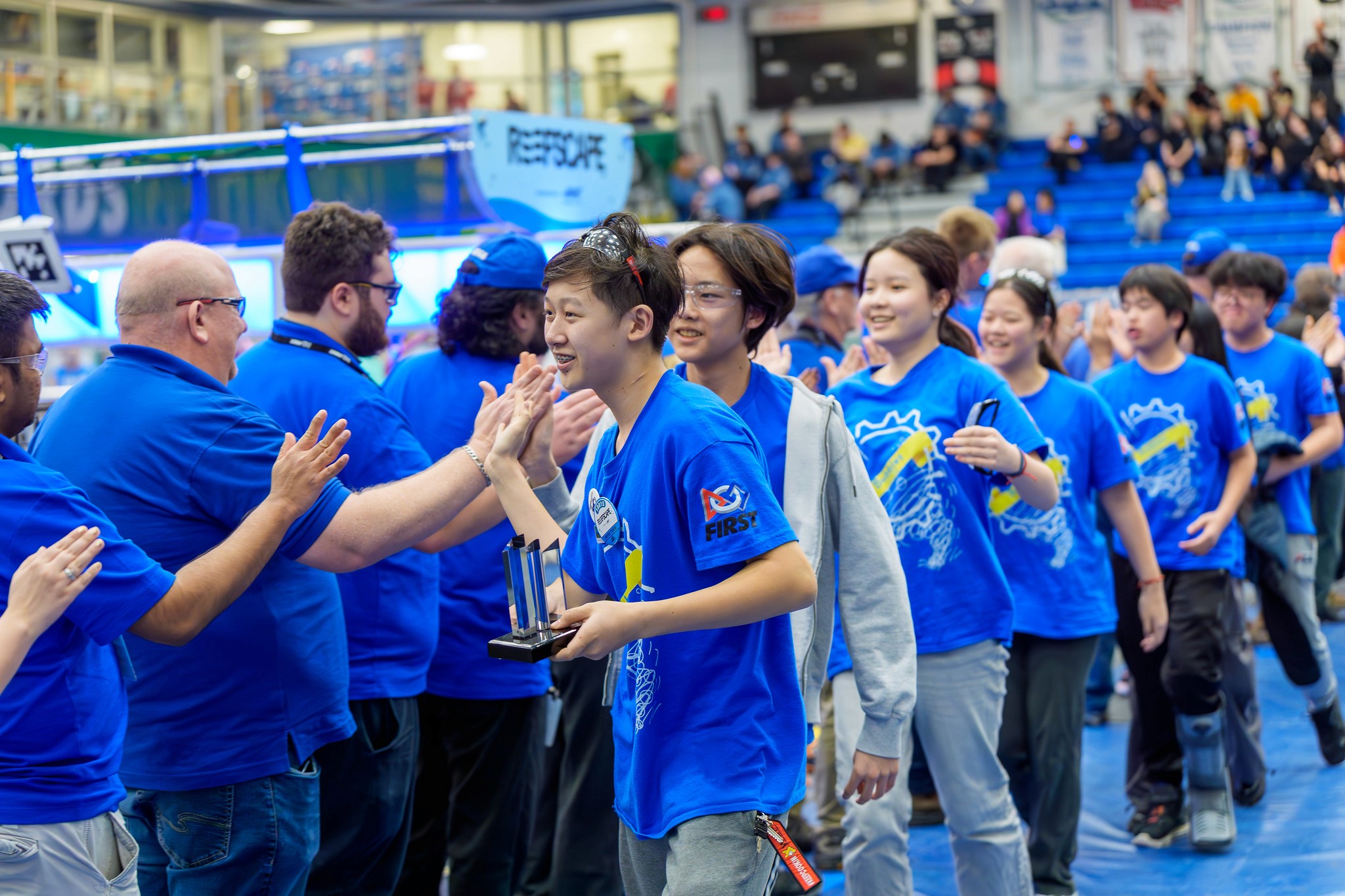
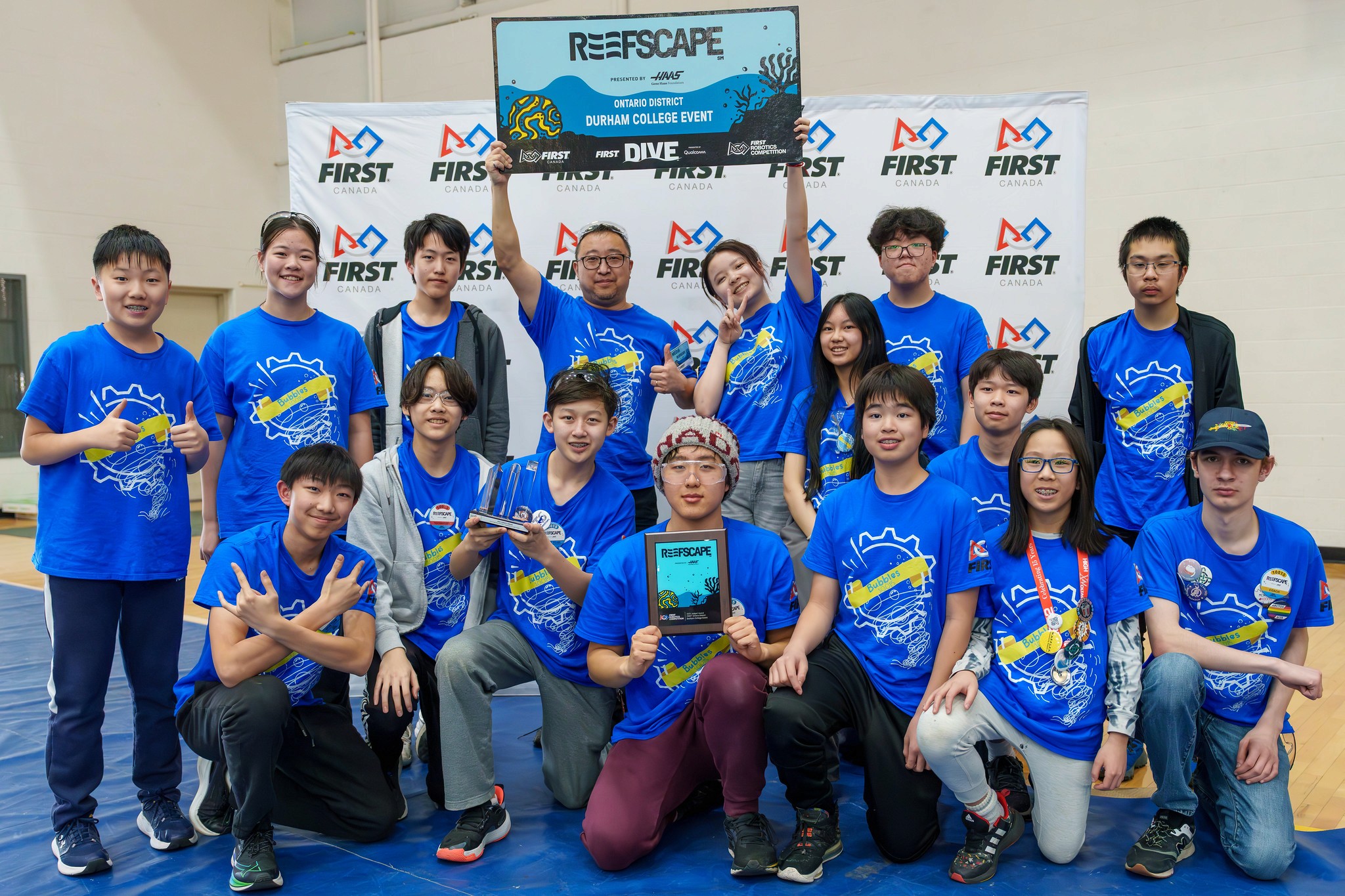
One week after redesigning its coral intake following lessons from its Newmarket event victory, rookie FRC Team 10015 Bubbles earned the Judges’ Award at the 2025 Durham College District Event. The recognition celebrated the Aurora students’ rapid troubleshooting, authentic technical ownership, outreach, teamwork, and determination to improve whenever competition revealed a new problem (FRC-Event).
By SolversMind Robotics
Published March 15, 2025 | Updated July 23, 2026
Reviewed by SolversMind Robotics mentors
How did FRC Team 10015 Bubbles win the Judges’ Award at Durham?
FRC Team 10015 Bubbles earned the Judges’ Award at the 2025 ONT District Durham College Event only two weeks after winning the Newmarket District Event and receiving the Rookie All-Star Award. At Durham, judges again recognized the young Aurora team, this time for its distinctive student-led engineering process, rapid technical growth, community outreach, and developing team culture. Between the two competitions, students identified limitations in their coral intake and redesigned the system within approximately one week, adding a funnel that improved alignment and flexibility during intense match play. When continued competition revealed additional weaknesses, the students kept troubleshooting and refining the mechanism rather than accepting its limitations. The award recognized more than robot performance. It celebrated the students’ ability to observe, learn, redesign, test, and persevere under pressure, proving that meaningful FRC competition happens not only on the field, but also during the long hours when students transform failure into engineering knowledge.
How did Bubbles continue its momentum after winning at Newmarket?
Bubbles entered the Durham College District Event carrying the excitement of an extraordinary FRC debut.
At the Newmarket District Event, Team 10015 competed as part of the winning alliance with FRC Team 4946 The Alpha Dogs and FRC Team 5409 Chargers. The team also received the Rookie All-Star Award, recognizing its strong partnership effort and commitment to advancing the mission of FIRST.
For a new team, those results could easily have felt like a perfect beginning.
But the students did not return from Newmarket believing their robot was complete.
Winning did not hide the machine’s weaknesses. Competition exposed them.
Award Script
During the course of the competition, the judging panel may decide that a team’s unique efforts, performance, or dynamics merit recognition yet do not fit into any of the existing award categories.
With their strong foundation, these guppies have a bright future. By building symbiotic relationships with community and industry sponsors, these students have now become the teachers. Rising out from 10,000 leagues of pressure, this former FLL team floated to the top.
Congratulations Team 10015!
During laboratory testing, the first coral intake had worked under controlled conditions. The robot could approach the game piece carefully, align itself, and complete the intake without another robot applying pressure or blocking its path.
An FRC field was different.
Robots moved quickly around one another. Drivers had limited time and visibility. Contact changed alignment. A mechanism that worked when approached from a perfect angle became less reliable during the speed and intensity of a real match.
The students realized that their original intake required too much precision.
They needed a system that could guide the coral into position even when the robot approached at an imperfect angle.
With only a short period before Durham, the team redesigned the intake and added a funnel to create a wider, more forgiving entry area. The funnel helped direct the game piece toward the mechanism instead of requiring the driver to achieve exact alignment every time.
This was an important lesson for a rookie team.
A mechanism is not successful simply because it works once in the workshop.
It must work repeatedly, quickly, and reliably under the unpredictable conditions of competition.
“This award reflects the spirit and resilience of our students,” said head coach Mr. Dahai Zhang (aka Mr. Pi). “They’ve built not just a robot, but a foundation for leadership and impact.”
How did students improve the coral intake in only one week?
Bubbles began its rookie season with little direct FRC experience and without a deep group of specialized technical mentors.
The students therefore had to rely heavily on the troubleshooting habits they had developed through years of FIRST LEGO League.
FLL had taught them to watch closely, identify the actual cause of a failure, separate a large problem into smaller questions, test one change at a time, and use evidence rather than frustration to guide the next decision.
After Newmarket, the students examined what had happened during real matches:
At which approach angles did the intake fail?
Did the coral miss the mechanism or become trapped?
Was the problem caused by driver alignment, mechanism geometry, or both?
How wide could the intake become without creating new size or structural problems?
Could a passive guide improve reliability without adding unnecessary motors or controls?
How quickly could the new parts be manufactured, installed, programmed, and tested?
The answer was not a complete replacement of the robot.
It was a focused redesign based on competition evidence.
The students created a funnel that expanded the effective capture area and guided the coral toward the intake. They manufactured the new components, integrated them with the existing mechanism, tested the system, and prepared it for Durham within approximately one week.
The result worked extremely well at the beginning of the event.
Then, after several matches, the students discovered new limitations.
Repeated use, defensive pressure, contact, alignment changes, and the speed of competition revealed problems that had not appeared during the first tests.
Once again, the robot became their teacher.
The team returned to the pit, inspected the mechanism, discussed the evidence, made adjustments, and tested again.
This continuous cycle of observation and improvement demonstrated the real power of student-owned engineering.
The students were not waiting for an adult to diagnose the robot for them. They understood enough of the system to investigate the problem, propose changes, and accept responsibility for whether those changes worked.
Why did the judges recognize Bubbles again?
The Judges’ Award recognizes a team whose unique efforts, performance, or story stand out to the judging panel in a way that may not fit neatly within another award category. FIRST’s official records confirm that Bubbles received the award at Durham after earning both the event victory and Rookie All-Star Award at Newmarket.
The original event story captured the judges’ impression:
“Most rookies focus on just getting their robot to move. Bubbles has already gone further, showcasing what it means to lead, collaborate, and innovate.”
That recognition was deeply meaningful because the students’ work was not perfect.
The robot still had limitations. The intake still needed refinement. The team still lacked the experience and technical depth of organizations that had competed in FRC for many years.
What stood out was how the students responded.
They did not hide their mistakes.
They studied them.
They did not blame the field, the schedule, another robot, or their lack of experience.
They looked for what they could change.
They had already experienced the emotional high of winning Newmarket, but they returned to work almost immediately because their goal was larger than preserving a successful first impression.
The judges saw a rookie team developing the habits required for long-term success:
authentic student ownership
rapid learning
practical troubleshooting
technical curiosity
meaningful outreach
team cohesion
perseverance after failure
willingness to improve between every match and event
Other teams noticed those qualities as well.
In FRC, reputation is not created only by rankings. It develops through how students behave in the pit, how they respond when the robot breaks, how they ask for advice, how they help others, and whether they return to the field stronger after a difficult match.
Bubbles was beginning to win the respect of the community because its students were visibly learning in real time.
Where does the real FRC competition happen?
FIRST Robotics Competition does not happen only inside the arena.
The field is where the public sees the result.
The real competition often happens in a corner of the workshop, around a computer after everyone else has gone home, or beside a robot that still refuses to work after hours of effort.
It happens during the days and nights when students give up free time to learn an unfamiliar technical concept.
It happens when a mechanism that looked perfect in CAD does not fit.
It happens when the code compiles but the robot behaves differently.
It happens when a student has to choose between becoming discouraged and asking one more question.
It happens when teammates disagree, examine the evidence, and eventually create a better plan together.
Those moments do not appear on the scoreboard, but they determine what the robot will eventually become.
When the redesigned mechanism finally works, the students’ celebration is immediate and genuine.
They know exactly how many failures came before that success.
That moment can be more meaningful than any trophy because it confirms that their thinking, persistence, and teamwork produced a real result.
The Judges’ Award gave public recognition to this work, but the students had already received their most important reward each time a problem they once believed was beyond them became something they could understand and solve.
This is central to the Bubbles philosophy.
The robot is not simply built for students to compete with.
The challenge of building the robot helps students become more observant, capable, resilient, and confident.
How did Ryan Zhang lead the team’s continuous improvement?
Team captain Ryan Zhang played a central role in keeping Bubbles focused on improvement throughout the short period between Newmarket and Durham.
As a principal student developer of the robot, Ryan helped the team analyze the intake failures, evaluate possible changes, integrate the redesigned system, and continue troubleshooting as new problems appeared during competition.
His responsibility was not limited to completing technical work himself.
He also had to communicate the problem to teammates, bring different ideas into the discussion, help divide the work, and make sure the knowledge gained from each failure was shared across the team.
That distinction matters.
A student can solve one problem alone.
A leader helps the entire team become better at solving the next one.
Ryan’s years in FIRST LEGO League had already taught him that a competition robot is never truly finished. Every run produces information. Every failure reveals an assumption. Every improvement creates a new question.
He carried that mindset into FRC and encouraged the team to treat difficulties as engineering evidence rather than personal disappointment.
SolversMind is grateful for Ryan’s leadership and for every student who continued working when the easier choice would have been to accept the robot as it was.
Their effort demonstrated why student ownership matters.
Students do not become capable engineers because adults protect them from difficult problems.
They become capable when they are taught the foundations, trusted with meaningful responsibility, supported through failure, and given the opportunity to discover that they can solve more than they once believed.
What did the Durham Judges’ Award mean for Bubbles?
Bubbles finished the Durham event ranked 25th with a 6-10 record and competed in the playoffs as part of Alliance 6 with FRC Teams 4917 and 5031. The alliance advanced to Round 4 of the double-elimination bracket (FRC-Event).
Those results did not match the event victory the team had experienced at Newmarket.
Yet Durham became one of the most important events of the rookie season.
It taught the students that progress is not always reflected in a better ranking.
Sometimes the greatest growth occurs during a more difficult competition, when a team must confront weaknesses that success had temporarily hidden.
The Judges’ Award told the students that their effort had been seen.
The judges saw the rapid redesign.
They saw the student-led engineering.
They saw the outreach and team culture.
They saw a group of rookies who had already learned that the correct response to a problem was not to give up, but to understand it.
Two weeks earlier, Bubbles had won the Newmarket event and the Rookie All-Star Award.
At Durham, the students won the judges’ hearts.
Together, those results showed two sides of the team.
One award recognized what Bubbles had achieved.
The other recognized how the students were becoming capable of achieving more.
The funnel was only one small part of a much larger robot.
But the process behind it represented everything the team hoped to become:
Observe carefully. Learn honestly. Improve quickly. Never give up.
CLICK HERE FOR MORE PHOTOS
Tags:
FRC Team 10015 Bubbles, Judges’ Award, Durham College District Event, Ryan Zhang, FIRST Robotics Competition, REEFSCAPE, SolversMind Robotics, Aurora Robotics, York Region Robotics