26 Girls Discover Robotics at SolversMind’s Free FIRST Summer Camp
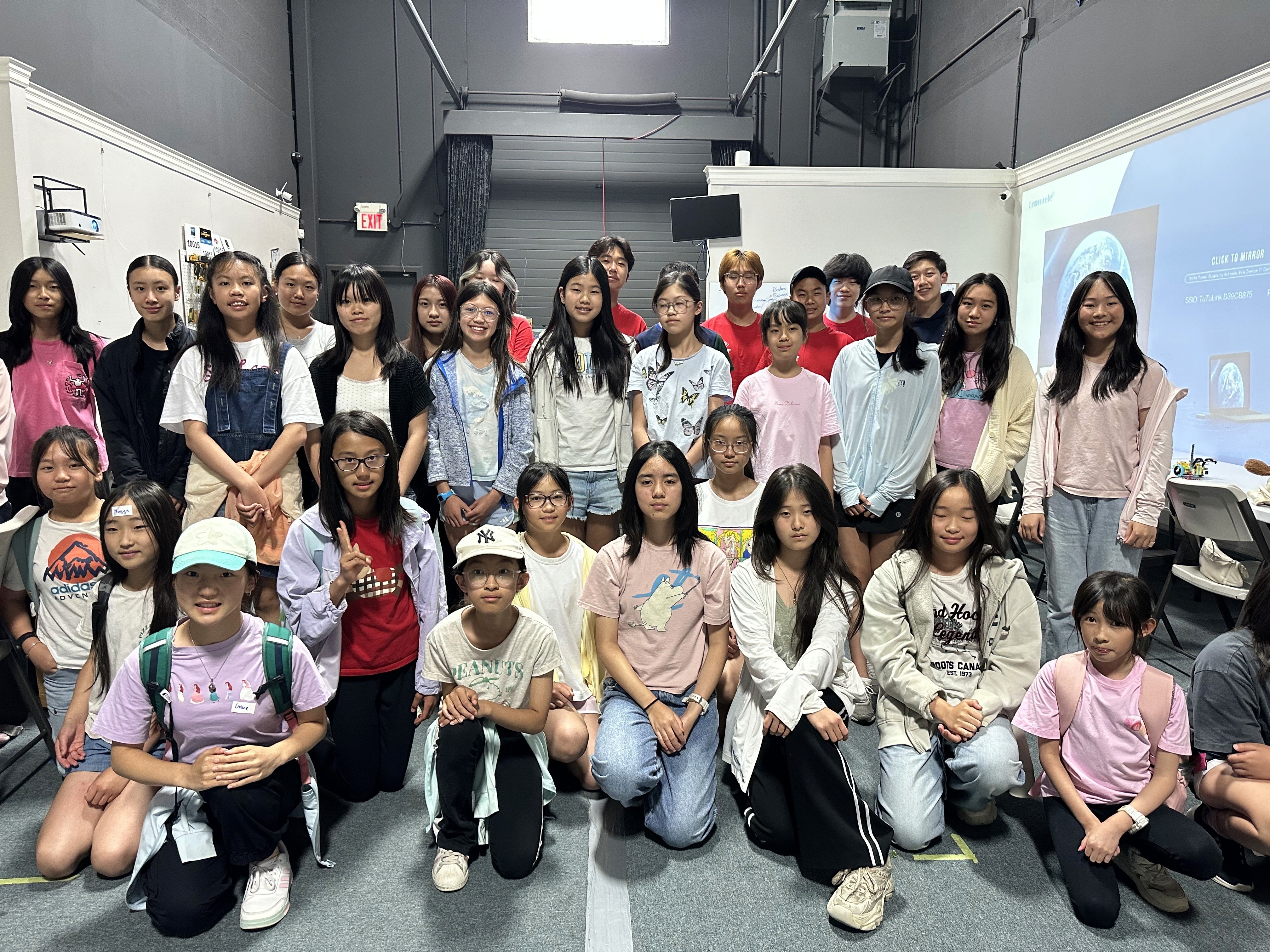
SolversMind Robotics and FRC Team 10015 Bubbles welcomed 26 girls from across York Region to a free FIRST-sponsored summer camp featuring hands-on robot building, coding, mentorship, and friendly competition (FIRST Robotics Canada).
By SolversMind Robotics
Published July 03, 2026 | Updated July 29, 2026
Reviewed by SolversMind Robotics mentors
For five days, our robotics centre was filled with building, coding, testing, cheering, and a lot of laughter.
From June 29 to July 3, 2026, SolversMind Robotics and FRC Team 10015 Bubbles delivered a free robotics summer camp for 26 girls between the ages of 9 and 14 from communities across York Region.
The camp was sponsored by FIRST Robotics Canada and gave the participants an opportunity to explore robotics in a welcoming, hands-on environment.
For many of the girls, this was their first experience with FIRST.
By the end of the week, they had built robots, written code, solved challenges, competed in friendly matches, worked with student mentors, and discovered that robotics could be creative, social, challenging, and fun.
What happened at the free girls’ robotics camp?
SolversMind Robotics and FRC Team 10015 Bubbles delivered a free robotics summer camp for 26 girls from York Region from June 29 to July 3, 2026. Sponsored by FIRST Robotics Canada, the five-day program welcomed girls ages 9 to 14, including students from communities that remain underrepresented in STEM. Participants learned how to build and code robots through hands-on, project-based activities, teamwork challenges, and friendly competitions. They were mentored by experienced student volunteers from SolversMind’s FRC, FTC, and FLL programs, giving them direct access to young role models who had followed the same robotics pathway. Many participants arrived with little knowledge of FIRST but left excited about robotics and interested in learning more. Every girl received a certificate recognizing her participation. The program filled in less than 24 hours, showing the strong demand for accessible robotics opportunities for girls across Aurora and York Region.
Why was FRC Team 10015 Bubbles selected to deliver the camp?
FIRST Robotics Canada selected FRC Team 10015 Bubbles to deliver the program because of the team’s experience in youth robotics education, competition performance, community leadership, and positive representation of the FIRST program.
For Bubbles, being selected was both an honour and a responsibility.
The team has grown from a rookie FRC team into a group of experienced student leaders who can build robots, explain engineering ideas, mentor younger students, speak with families, and represent FIRST professionally.
Their experience reaches beyond FRC.
Many members began in FIRST LEGO League, where they learned how to design, program, test, present, and work as a team. As they progressed into FTC and FRC, they continued building stronger technical and leadership skills.
FIRST officially lists Bubbles as FRC Team 10015, while SolversMind’s broader student pathway connects FLL, FTC, and FRC learning with communication, teamwork, leadership, and community engagement.
During the camp, the Bubbles students were not simply demonstrating a finished robot.
They were teaching patiently, helping participants solve problems, encouraging students after failed tests, and making sure every girl felt included.
This was Gracious Professionalism in action.
The mentors understood that their behaviour could shape how a young participant viewed robotics, engineering, and the FIRST community. They represented FIRST not only through what they knew, but through how they treated others.
What did the girls learn during the five-day camp?
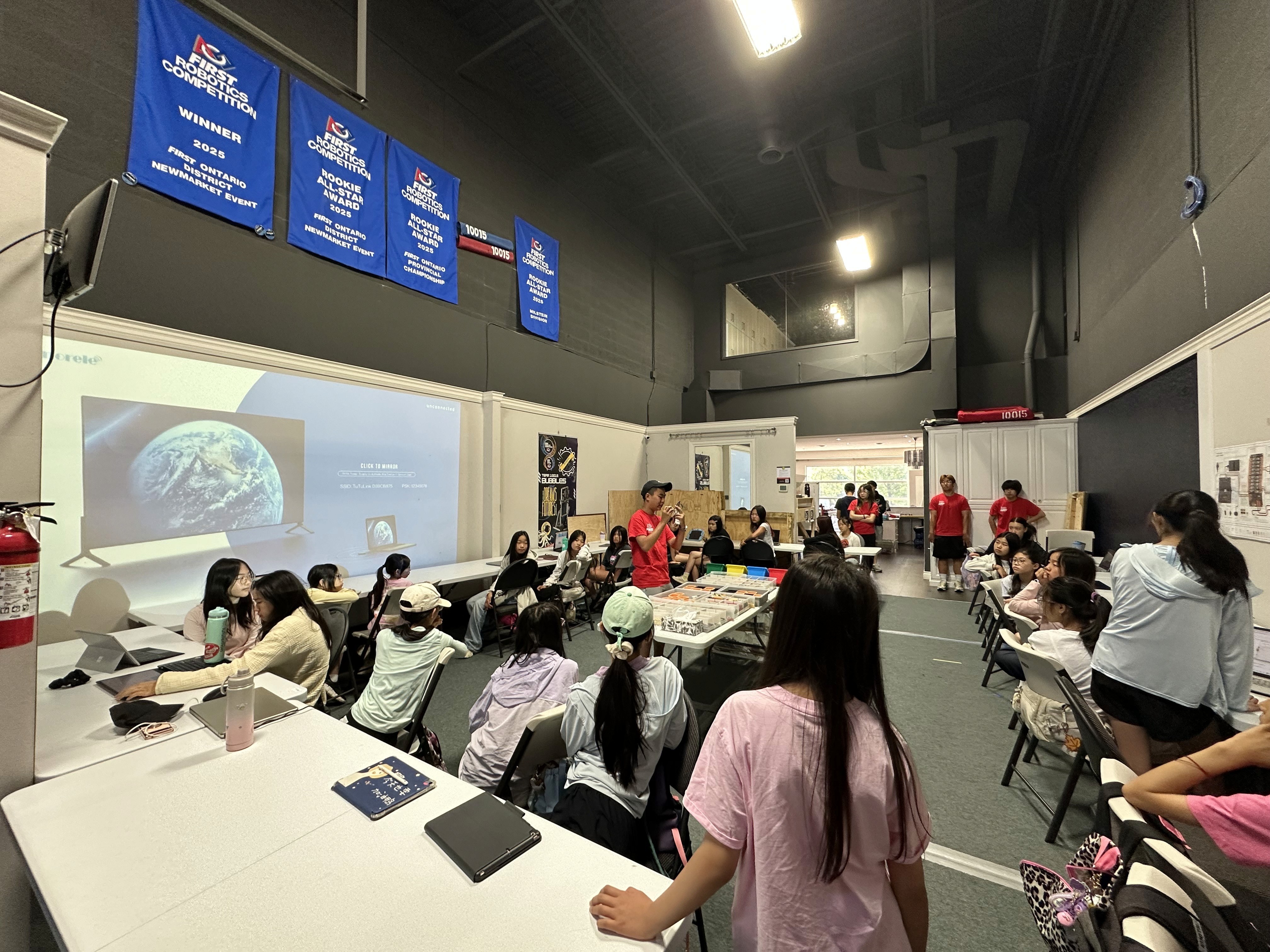
The camp used hands-on, project-based learning rather than long lectures.
Each activity gave the girls something real to build, test, improve, and share.
The participants learned basic robot construction, motor control, coding logic, sensors, teamwork, and problem-solving. They also took part in friendly challenges that allowed them to apply what they had learned.
When a robot did not move correctly, the students had to investigate the problem.
Was the mechanism built incorrectly?
Was the motor connected to the wrong port?
Was there a mistake in the code?
Did the robot need a better starting position?
Instead of giving the participants every answer, our student mentors guided them through the thinking process.
This helped the girls understand that engineering is not about getting everything right on the first attempt. It is about trying an idea, observing the result, learning from it, and improving the design.
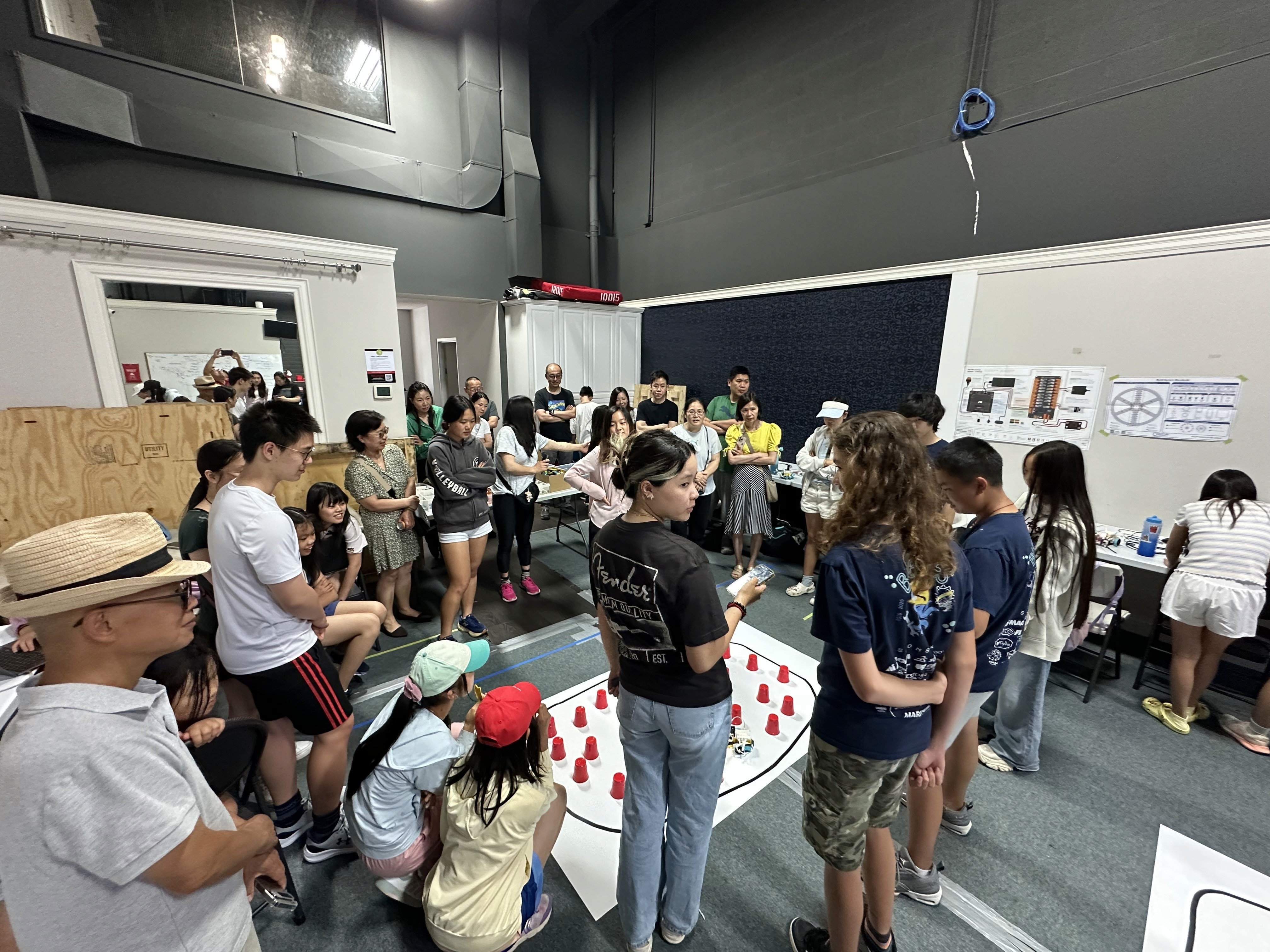
The friendly competitions added excitement to the program, but the focus was never only on winning.
The girls were encouraged to share ideas, support teammates, learn from other groups, and celebrate progress.
That combination of technical learning and teamwork reflects the wider SolversMind approach. Robotics becomes a practical way for students to develop confidence, persistence, communication, and leadership alongside engineering skills.
Why was the camp important for girls in York Region?
Girls and women continue to be underrepresented in many areas of engineering and technology.
One way to change that is to give girls positive STEM experiences early, before they begin deciding which subjects, clubs, or careers feel open to them.
The participants at this camp came from communities across York Region, including the Aurora area and neighbouring municipalities.
Some already enjoyed science or coding. Others had never built a robot before.
The camp gave them a low-pressure place to explore.
They could ask questions, make mistakes, try again, and learn from student mentors who were only a few years older than they were.
That age connection mattered.
When a nine- or ten-year-old girl sees a high school student confidently programming a robot, explaining a sensor, or leading a team, robotics starts to feel more reachable.
It is no longer something done only by adults, professionals, or people far away.
It becomes something she can imagine doing herself.
FIRST Robotics Canada has long identified increasing participation by girls and young women in science, technology, and engineering as part of its broader mission.
This camp brought that goal into a local setting where girls could experience FIRST directly in their own community.
What role did the FRC, FTC, and FLL student volunteers play?
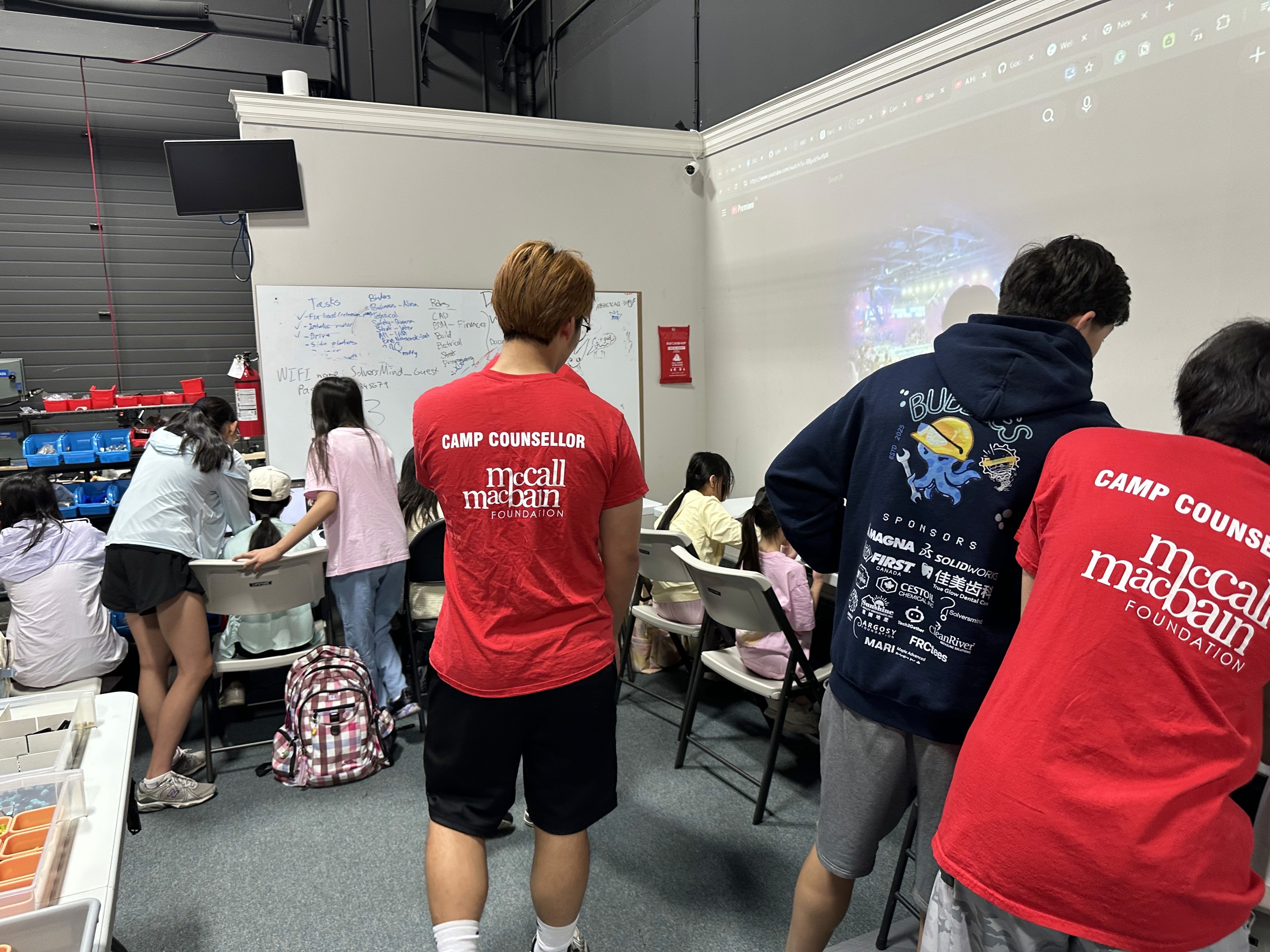
The camp was led with support from student volunteers across SolversMind’s FRC, FTC, and FLL programs.
Each group brought something different to the experience.
The FLL students understood how to introduce robotics in a simple, friendly way. Many remembered what it felt like to build and code their first robot.
The FTC students brought experience with more advanced programming, mechanical systems, and team organization.
The FRC Team 10015 Bubbles students provided leadership, technical support, troubleshooting, demonstrations, and mentorship throughout the week.
Together, they created a complete student leadership pathway.
Younger students could see what robotics looked like at different stages. They could begin with a simple robot project and then imagine continuing into FLL competition, FTC engineering, and eventually FRC.
The volunteers also gained valuable experience.
Teaching requires a deeper level of understanding than completing a task independently. A student mentor must explain an idea clearly, recognize why someone is confused, and find a different way to demonstrate the solution.
They also need patience.
When a participant becomes frustrated, the mentor cannot simply take over and finish the robot. The goal is to help the student experience the satisfaction of solving the problem herself.
This is why outreach is such an important part of robotics education.
The participants learn new technical skills, while the mentors develop communication, responsibility, empathy, and leadership.
Why did registration fill so quickly?
Registration for the camp filled in less than 24 hours, and more students registered than the program could accept.
The response showed how much demand exists for accessible, high-quality robotics programming for girls in York Region.
It also reflected the trust that local families have developed in SolversMind Robotics and FRC Team 10015 Bubbles.
Families in the community have followed Bubbles through robotics competitions, outreach events, public demonstrations, youth mentorship, and international achievements.
They have seen students from SolversMind progress from young FLL participants into capable FTC and FRC leaders.
When the free camp was announced, parents recognized that their daughters would receive more than basic childcare or a simple technology activity.
They would be learning in a real robotics environment with experienced student mentors.
The quick registration was exciting, but it also showed us the limits of one camp.
For every girl who received a place, there were others who wanted the same opportunity.
That response has encouraged us to think about how the program can grow.
How did the participants respond to the camp?
The most important feedback came directly from the girls.
Throughout the week, they told our mentors that they were having fun, enjoying the robot activities, and learning things they had not experienced before.
Many became more confident as the camp progressed.
At the beginning of the week, some participants were hesitant to touch the equipment or make changes without asking for permission.
By the end, they were testing their own ideas, debugging their code, helping teammates, and explaining how their robots worked.
That change is one of the clearest signs of a successful learning experience.
The goal was not for every participant to master robotics in five days.
The goal was for each girl to leave believing that she was capable of learning it.
At the end of the camp, every participant received a certificate recognizing her work and completion of the program.
The certificates gave the girls something to take home, but the most valuable result was the confidence they had built during the week.
They left knowing more about FIRST, robotics, coding, engineering, and the opportunities available to them.
How does this camp reflect SolversMind’s educational approach?
At SolversMind, we do not see robotics as only a competition activity.
Competitions are exciting and important, but the larger purpose is to help young people become capable problem-solvers, communicators, teammates, and leaders.
This camp brought that idea to life.
The participants learned technical skills, but they also learned how to work with new people, divide responsibilities, respond to failure, present ideas, and celebrate one another’s progress.
The student volunteers practised leadership, teaching, public communication, and responsibility.
FRC Team 10015 Bubbles represented FIRST through service rather than through a tournament result.
Everyone involved had an opportunity to grow.
That is what meaningful STEM outreach should do.
It should not be a one-way demonstration where experienced students show what they can do and younger students simply watch.
It should place tools in the participants’ hands and give them the chance to build something themselves.
SolversMind’s stated educational model combines technical learning with confidence, teamwork, communication, leadership, persistence, and community engagement.
The free girls’ robotics camp was a strong example of that model in practice.
What comes next for the girls’ robotics program?
The success of the camp has encouraged SolversMind Robotics and FRC Team 10015 Bubbles to expand future opportunities for girls and other students who remain underrepresented in STEM.
Twenty-six participants made the first program energetic, personal, and meaningful.
But the rapid registration showed that many more families are looking for this kind of experience.
In the future, we hope to increase the number of available spaces, offer additional sessions, involve more student mentors, and create pathways for interested participants to continue into regular FIRST LEGO League and robotics programs.
A five-day camp can introduce a student to robotics.
The next step is helping her continue.
That might mean joining a team, attending another workshop, learning more advanced coding, returning as a volunteer, or one day mentoring another young student.
This is how a STEM community grows.
One group receives an opportunity. Some of those students continue learning. Eventually, they return to create opportunities for others.
We are grateful to FIRST Robotics Canada for sponsoring the camp and trusting FRC Team 10015 Bubbles to deliver it.
We are proud of the FRC, FTC, and FLL student volunteers who made the week welcoming, educational, and fun.
Most of all, we are proud of the 26 girls who arrived ready to try something new.
They built, coded, tested, competed, collaborated, and discovered that robotics could belong to them too.
This camp may have lasted only five days, but for some of these girls, it could be the beginning of a much longer FIRST journey.
Tags:
girls in STEM, free robotics camp, FIRST Robotics Canada, FRC 10015 Bubbles, SolversMind Robotics, York Region summer camp, Aurora robotics, Gracious Professionalism, community outreach, FLL, FTC, FRC