Regional Champions Once Again: Solvers of X & Y Begins Its Final FLL Season with Another Champion’s Award
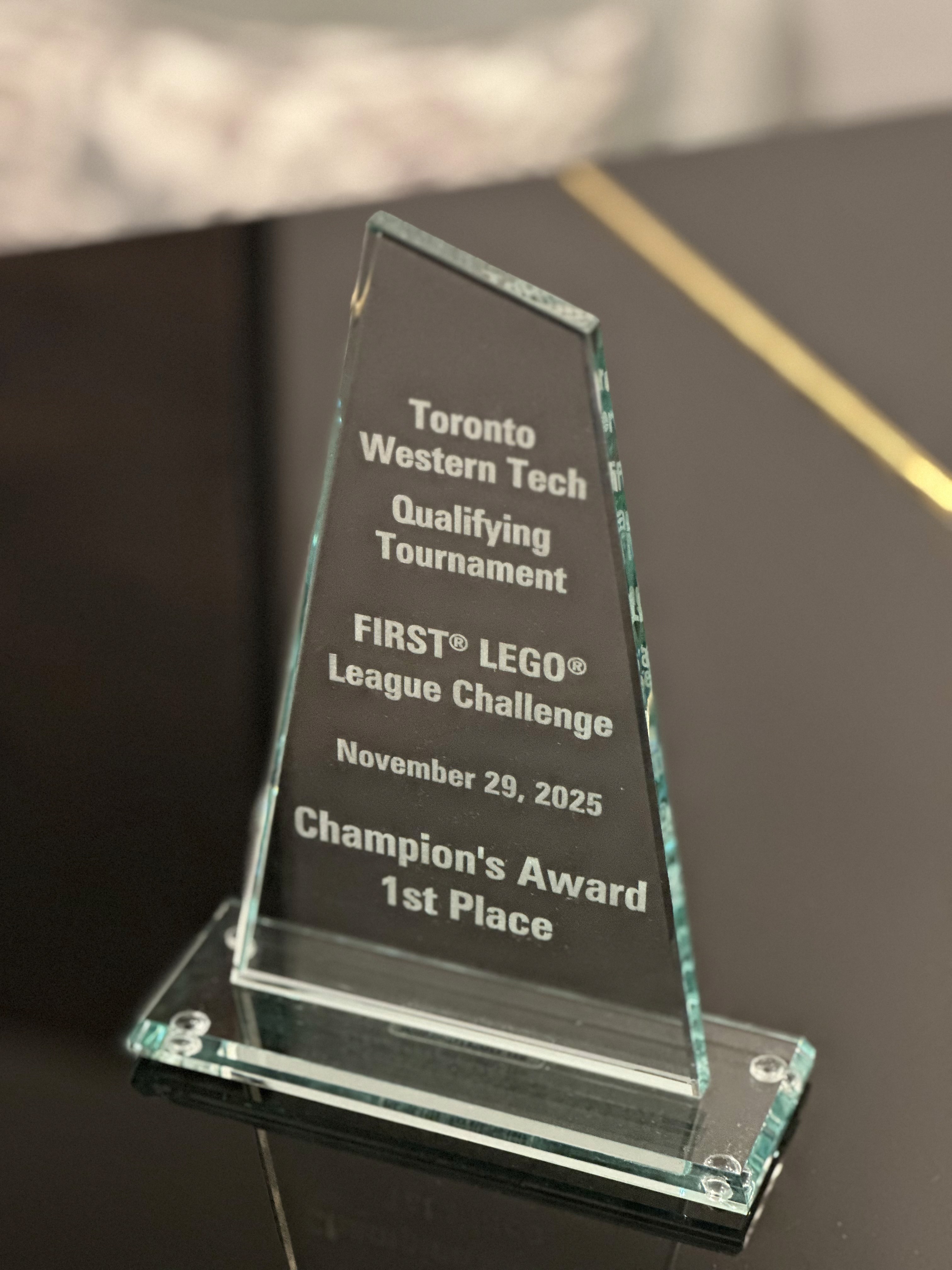
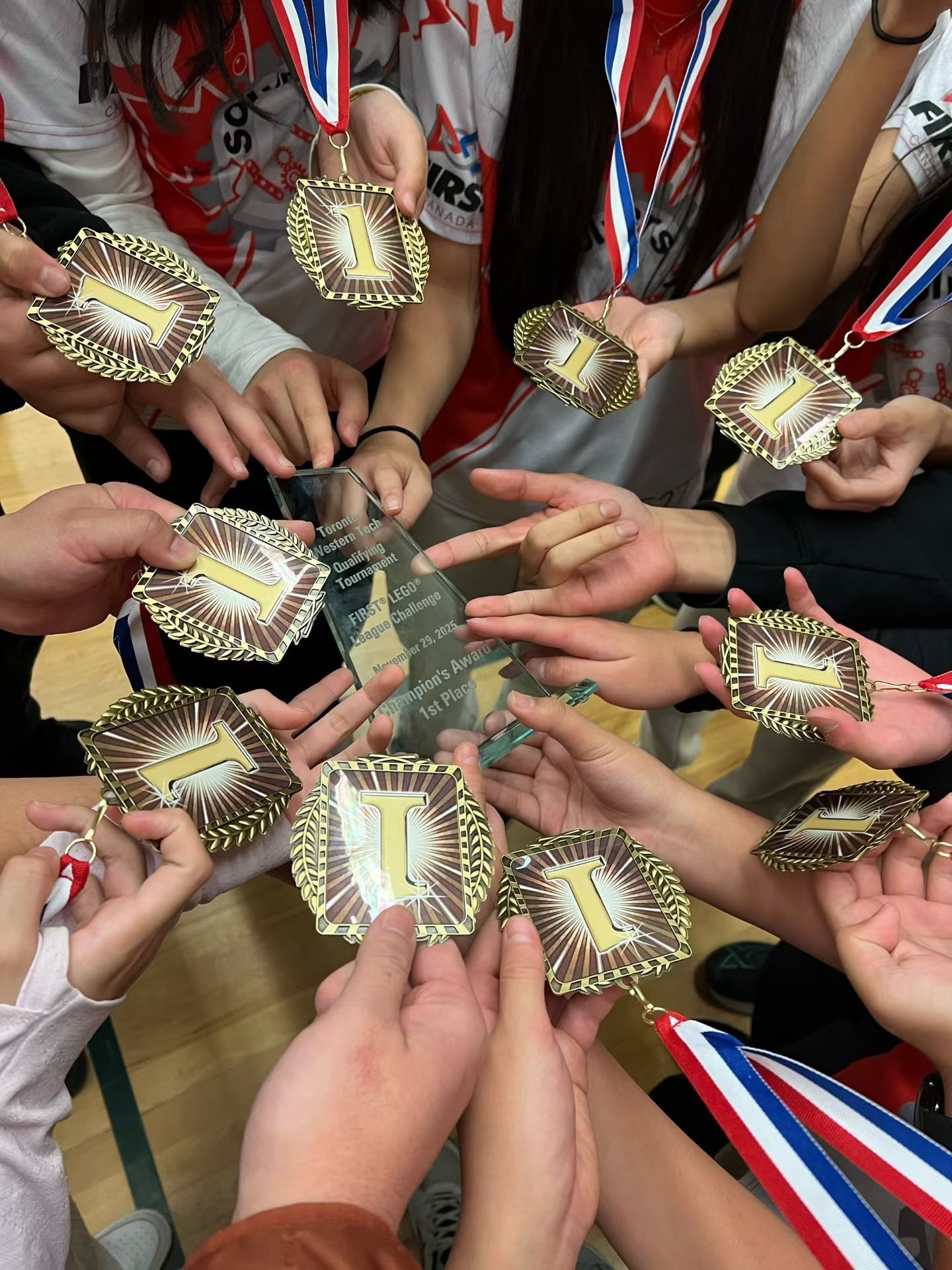
FLL Team 52777 Solvers of X & Y won the Champion’s Award, 1st Place, at the Toronto Western Tech Qualifying Tournament, earning a place at the Ontario Provincial Championship. The team combined robot performance, engineering design, Core Values, and SnapToSplat, an AI-powered 3D reconstruction platform for preserving archaeological sites and cultural heritage (Toronto Western Tech Qualifying Tournament - Saturday, November 29, 2025).
By SolversMind Robotics
Published November 29, 2025 | Updated July 22, 2026
Reviewed by SolversMind Robotics mentors
How did Solvers of X & Y become regional champions once again?
SolversMind Robotics’ FIRST LEGO League teams became regional champions again during the 2025-2026 UNEARTHED season, demonstrating achievement in robot design, innovation, Core Values, and the Robot Game. FLL Team 52777 Solvers of X & Y retained the Champion’s Award, 1st Place, at the Toronto Western Tech Qualifying Tournament on November 29, 2025, and advanced toward the Ontario Provincial Championship. The team also developed SnapToSplat, a student-led Innovation Project that makes advanced 3D Gaussian Splatting technology more accessible. Users can upload photographs and generate an interactive 3D scene for a browser, creating potential applications in STEM education, environmental monitoring, cultural heritage preservation, engineering documentation, and digital storytelling. Through the project, students explored artificial intelligence, computer vision, software engineering, user experience design, and 3D visualization. Their regional success reflected more than competition results: years of FLL training helped students become stronger engineers, researchers, presenters, teammates, and role models for younger SolversMind teams.
Why is the FIRST LEGO League Champion’s Award so meaningful?
The Champion’s Award recognizes a team that demonstrates excellence across the complete FIRST LEGO League experience.
A strong robot score alone is not enough.
Teams must show thoughtful engineering, an innovative response to a real-world problem, effective communication, collaboration, and a clear understanding of the FIRST Core Values.
That makes the award especially meaningful because it reflects the strength of the whole team rather than only one part of its performance.
Solvers of X & Y demonstrated that balance through a well-developed robot, confident presentations, strong teamwork, and an ambitious Innovation Project that applied artificial intelligence and computer vision to the preservation of important places.
What was the 2025–2026 FIRST LEGO League UNEARTHED season?
The 2025–2026 FIRST LEGO League season was called UNEARTHED, part of the archaeology-themed FIRST AGE season presented by Qualcomm.
Teams were challenged to investigate how discoveries from the past help people understand history and build a better future. They used STEM skills, robotics, research, and teamwork to explore problems connected to archaeology, artifacts, historical places, and cultural knowledge.
The theme encouraged students to look beyond traditional archaeology and consider how emerging technologies could help document, analyze, and preserve evidence from the past.
For Solvers of X & Y, that question led to the creation of SnapToSplat.
What problem did SnapToSplat address?
People take millions of photographs of historical landmarks, archaeological locations, museums, natural habitats, classrooms, engineering projects, and community spaces.
However, most of those places are preserved only as collections of flat, two-dimensional images.
A photograph can capture one angle, but it cannot fully recreate the feeling of moving through a location, examining an artifact from different perspectives, or documenting how an environment changes over time.
Professional 3D reconstruction systems can help solve this problem, but they are often expensive, technically complex, computationally demanding, and inaccessible to many students, teachers, community groups, and smaller organizations.
Solvers of X & Y asked a practical question:
Could advanced 3D reconstruction be made simple enough for ordinary users to access through a web browser?
How does SnapToSplat work?
The team developed SnapToSplat, an AI-powered web platform that transforms a series of ordinary photographs into an interactive, photorealistic three-dimensional scene.
Users can photograph an object, site, room, landscape, or structure from multiple angles. The platform then processes those images using techniques connected to computer vision and 3D Gaussian Splatting, commonly known as 3DGS.
The reconstructed scene can be explored in three dimensions through a web browser, allowing users to view the subject from different positions and perspectives.
By simplifying this process, SnapToSplat makes advanced 3D visualization more approachable for students, educators, museums, researchers, environmental groups, engineers, and local communities.
The working platform is available through the team’s official SnapToSplat website. citeturn180865view0turn920467view1
What is 3D Gaussian Splatting?
3D Gaussian Splatting is an emerging method for reconstructing and rendering realistic three-dimensional scenes from photographs.
Rather than presenting a location as a collection of individual flat images, the technology creates a spatial representation that viewers can move through and examine interactively.
For students, the technology connects several advanced fields, including:
artificial intelligence
computer vision
image processing
spatial computing
three-dimensional visualization
software engineering
user experience design
Solvers of X & Y did not study these ideas only as abstract technical concepts.
They applied them to a real problem and developed a usable platform designed to make the technology accessible to others.
How could SnapToSplat support archaeology and cultural heritage preservation?
Archaeological sites, historical buildings, artifacts, and community landmarks can be damaged by weather, development, disasters, conflict, vandalism, or the passage of time.
Creating accessible digital records can help preserve important visual and spatial information before it is lost.
SnapToSplat could support this work by helping users:
create interactive records of historical locations
document artifacts from multiple perspectives
preserve community landmarks digitally
compare how environments change over time
support museum and classroom learning
build virtual field trips
record excavation areas
present cultural stories through immersive digital scenes
The platform also has potential uses beyond archaeology, including environmental monitoring, engineering documentation, classroom demonstrations, robotics projects, architectural visualization, and digital storytelling.
What did the students learn by building SnapToSplat?
Developing the project required much more than generating an idea for a judging presentation.
The students explored how images can be processed into three-dimensional representations, how artificial intelligence systems interpret visual information, and how complex technical processes can be redesigned for non-expert users.
They also considered:
how users would upload photographs
how images should be captured for better reconstruction
how processing steps could be simplified
how interactive scenes should be displayed
who would benefit from the technology
how the platform could be tested and improved
how to explain the system clearly to judges and community members
This process connected research, engineering, programming, communication, design, and social impact.
The result was not simply a theoretical proposal.
It was a functional student-developed platform designed around a meaningful real-world need.
How did the team perform in robot design and the Robot Game?
The Champion’s Award reflected more than the Innovation Project.
Solvers of X & Y also demonstrated strong robot design, reliable programming, strategic mission planning, and an effective competition performance.
The students had to design a robot capable of completing multiple UNEARTHED Robot Game missions under strict time and field constraints.
They evaluated attachment designs, mission combinations, starting positions, movement accuracy, speed, and reliability. Every run required the team to balance scoring potential with the risk of failure.
The students also had to explain their engineering process to judges, including how the robot evolved through testing, how responsibilities were divided, and how the team used evidence to improve performance.
FIRST describes its LEGO League program as a hands-on robotics experience through which students develop real-world problem-solving, coding, design, critical-thinking, and teamwork skills. citeturn920467search8
How did Core Values contribute to the team’s success?
FIRST LEGO League is not only about what students build.
It also considers how they work together.
The Solvers of X & Y students had trained together over multiple seasons, learning how to divide responsibilities, communicate under pressure, resolve disagreements, support teammates, and combine different strengths into one team performance.
Their maturity was visible not only in competition results, but also in how they presented their work, responded to judges, encouraged one another, and represented the team.
Winning the Champion’s Award showed that their teamwork and values were as important as their robot and project.
Why did this victory matter in the team’s final FLL season?
This was the final FIRST LEGO League season for Solvers of X & Y.
The students entered the year with years of experience, significant past achievements, and high expectations from younger teams who had watched their journey.
Repeating as regional champions under those conditions was not automatic.
Each season brings a new game, a new theme, a new project, and a new set of engineering problems. Previous awards do not earn points in the next tournament.
The students had to begin again, learn the UNEARTHED challenge, develop a new robot strategy, research a new problem, build SnapToSplat, prepare their presentations, and perform when it mattered.
Winning the Champion’s Award again demonstrated that the team’s success was not based on one exceptional season.
It came from a repeatable culture of student ownership, disciplined training, engineering depth, teamwork, and continuous improvement.
How does this result reflect SolversMind’s FIRST LEGO League program?
SolversMind’s FIRST LEGO League program is designed to develop complete teams rather than focusing only on robot scores.
Students are trained to connect:
mechanical design
programming
mission strategy
research
innovation
public speaking
teamwork
leadership
community impact
The goal is not to provide students with a finished solution.
It is to create an environment where they learn to investigate problems, make decisions, test their ideas, accept failures, improve their work, and confidently explain what they created.
Solvers of X & Y’s repeated Champion’s Award results provide strong evidence of that approach.
Their performance also contributes to SolversMind’s historic record as one of the leading FIRST robotics training organizations in Aurora and York Region.
Across multiple seasons, SolversMind teams have earned regional, provincial, and international recognition in Robot Design, Innovation Project, Core Values, robot performance, and overall Champion’s Award competition.
Why does this achievement represent more than another trophy?
Awards provide meaningful recognition, but they are not the most important result of a FIRST LEGO League season.
Behind this Champion’s Award were years of growth.
The students became more technically capable, more confident in public speaking, more independent in problem-solving, and more mature in the way they worked together.
They learned that a difficult challenge could be divided into manageable problems.
They learned that an unsuccessful design was not a failure if it produced useful information.
They learned that advanced technologies such as artificial intelligence and 3D reconstruction could become tools for solving human and community problems.
Most importantly, they became role models for younger SolversMind students who could now see where a long-term FIRST journey might lead.
What comes next for Solvers of X & Y?
The regional championship secured the team’s advancement to the Ontario Provincial Championship.
The students would now continue refining their robot, strengthening mission consistency, improving their technical explanations, developing SnapToSplat, and preparing to compete against leading FIRST LEGO League teams from across Ontario.
This regional victory was a powerful beginning, but it was not the end of their final FLL journey.
It was the next step in a story built through years of student work, resilience, friendship, and shared ambition.
Congratulations to FLL Team 52777 Solvers of X & Y, regional Champion’s Award winners once again.
What a powerful start to your final FIRST LEGO League season.
Explore SnapToSplat
Visit the team’s official SnapToSplat platform to learn how Solvers of X & Y is making AI-powered 3D reconstruction more accessible for education, archaeology, engineering, environmental documentation, and cultural heritage preservation.
Tags:
FIRST LEGO League, Regional Championship, Champion’s Award, Renee Zhang, LEGO Robotics, Robot Design, Innovation Project, Core Values, STEM Education, SolversMind, SnapToSplat, 3D Gaussian Splatting, Artificial Intelligence, Computer Vision, STEM Education, Digital Heritage