Grade 9 Innovator Ryan Zhang Wins Best Hardware Hack at SpurHacks 2025

Grade 9 SolversMind student Ryan Zhang won the Best Hardware Hack Award at SpurHacks 2025 in Waterloo for RoboShadow, a student-built educational robotic arm combining engineering, coding, art, and entrepreneurship (Devpost).
By SolversMind Robotics
Published June 22, 2025 | Updated August 6, 2026
Reviewed by SolversMind Robotics mentors
Innovation is not defined by age.
It is defined by the ability to understand a problem, turn an idea into something real, and explain why that solution matters.
On June 22, 2025, Ryan Zhang, captain of SolversMind’s FRC Team 10015 Bubbles, and teammate Chris won the Best Hardware Hack Award at SpurHacks 2025 in Waterloo, Ontario.
Ryan was only in Grade 9.
As one of the youngest teams at an event built largely around university-level technology and entrepreneurship, they stood out with RoboShadow, a student-designed robotic arm that combines engineering, programming, art, storytelling, and accessible STEM education.
The official SpurHacks results awarded RoboShadow the Best Hardware prize and $1,250 CAD. More importantly, the achievement showed what years of student ownership through FIRST LEGO League can eventually produce: not students who wait for instructions, but young innovators who can research, design, build, pitch, answer difficult questions, and lead. Devpost
What did Ryan Zhang achieve at SpurHacks 2025?
Grade 9 student Ryan Zhang and teammate Chris Cheng won the Best Hardware Hack Award at SpurHacks 2025 in Waterloo, Ontario, for RoboShadow, a low-cost four-axis robotic arm that combines robotics with shadow-puppet storytelling. The project used an Arduino controller, servo motors, a lightweight 3D-printed frame, and a compact dual-axis spherical end effector that controls the direction of a flashlight. Ryan and Chris designed, built, programmed, documented, and pitched the working prototype during the hackathon. The official Devpost project page lists RoboShadow as the winner of the Best Hardware Hack Track, which carried a $1,250 CAD prize. For Ryan, the result was especially meaningful because he competed as a Grade 9 student in an event dominated by older participants. His success reflected years of FIRST LEGO League training in innovation, engineering, presentation, teamwork, and independent problem-solving. Devpost
Why was winning SpurHacks so unusual for a Grade 9 student?
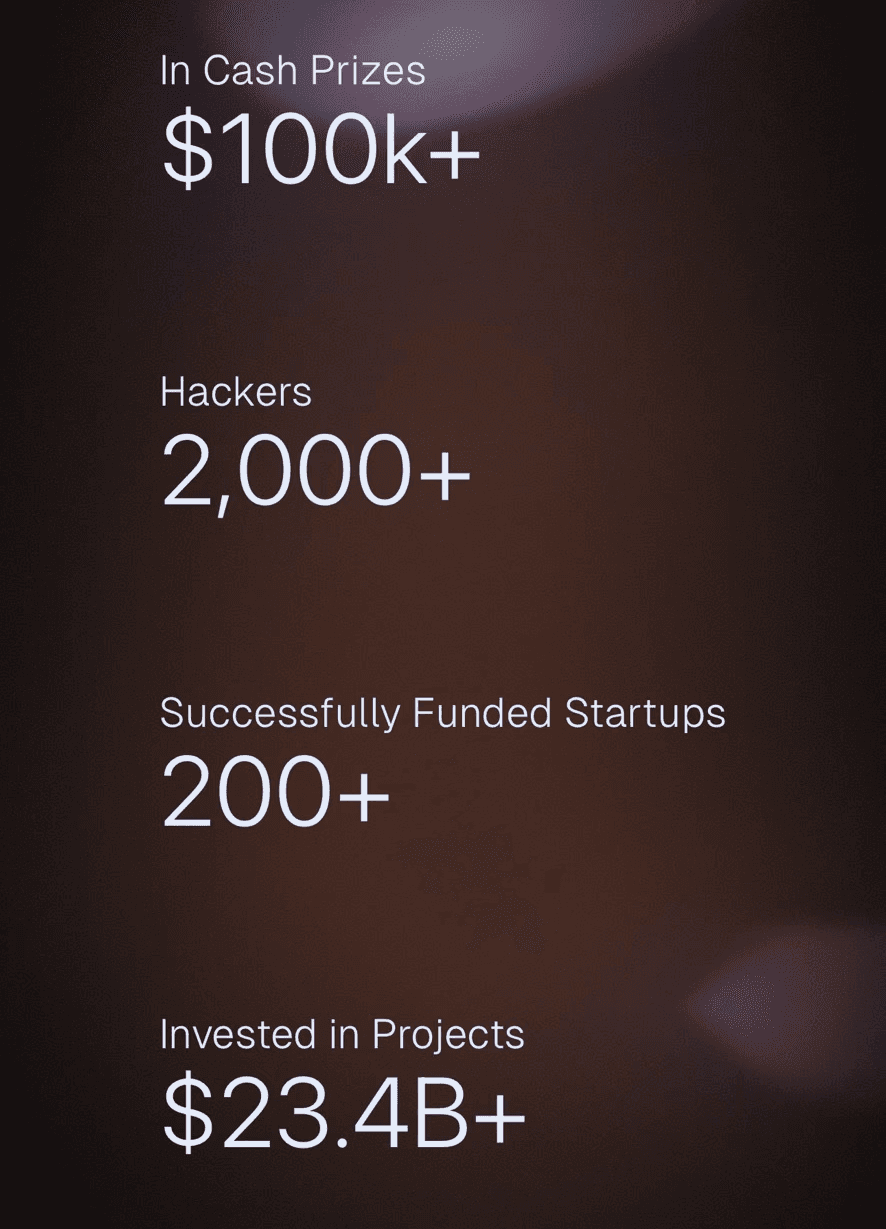
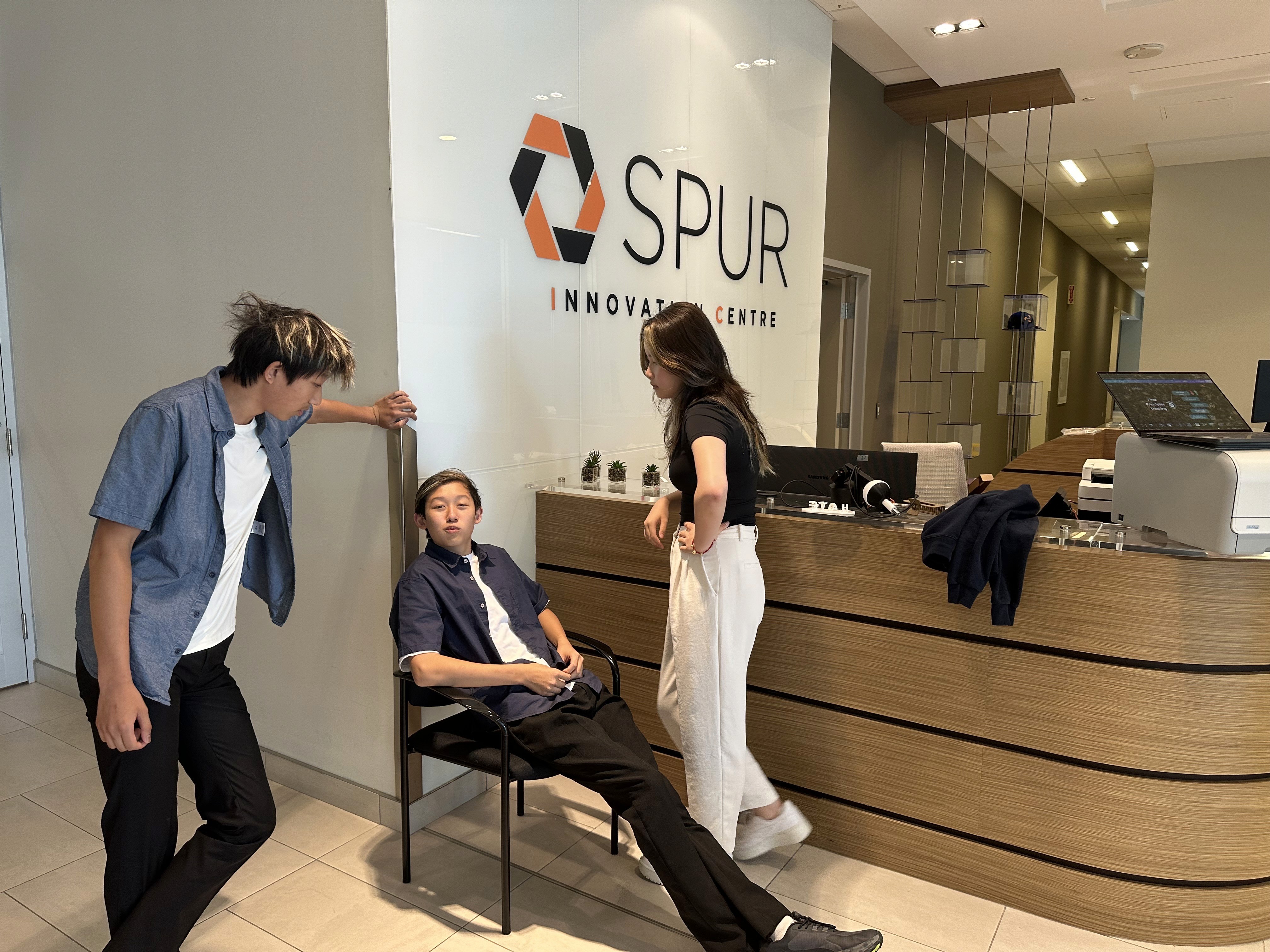
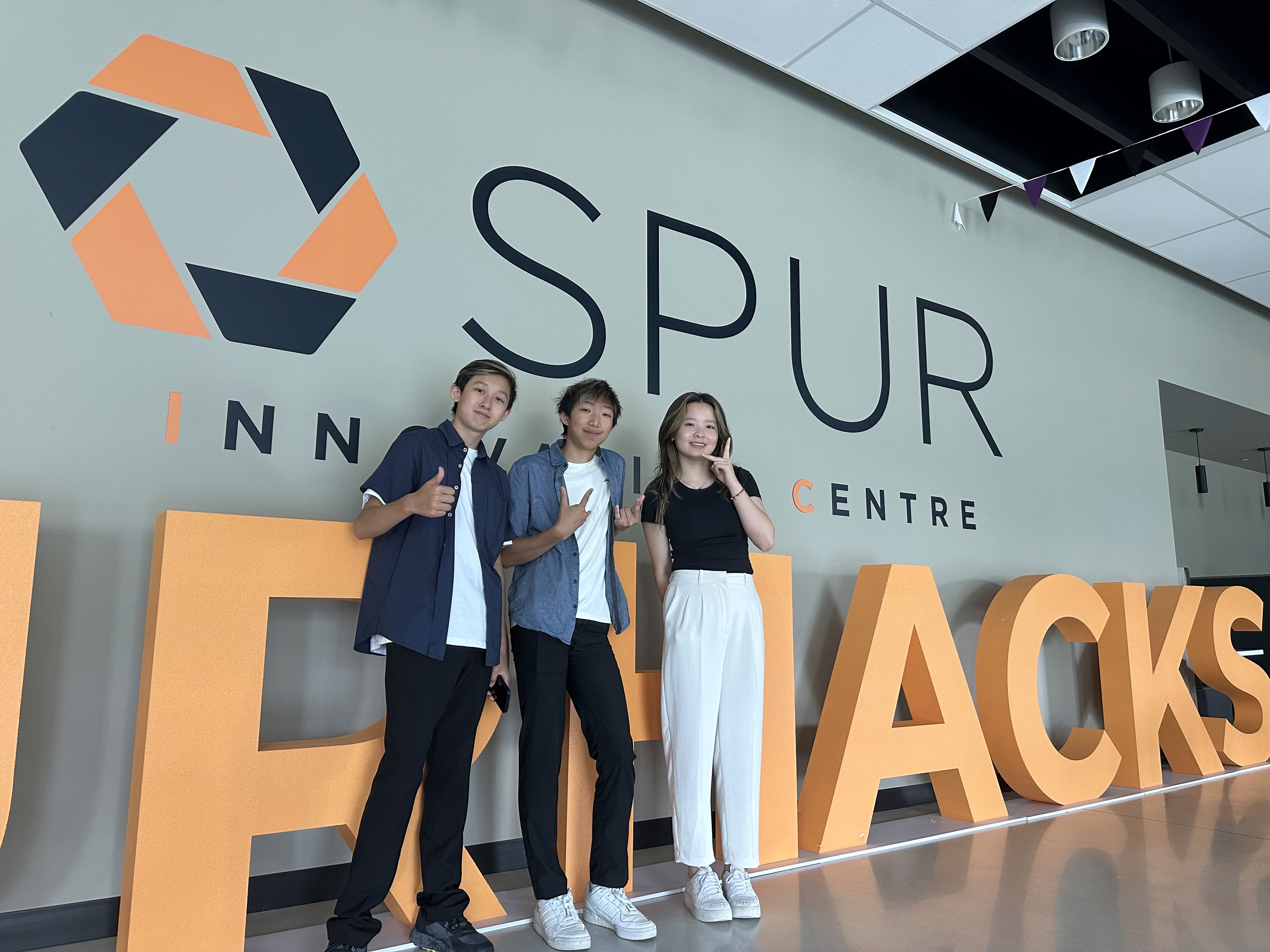
SpurHacks took place from June 20 to 22, 2025, at the SPUR Innovation Centre in Waterloo. Its official Devpost page recorded 904 registered hackers, 291 submitted projects, and more than $106,000 in available prizes. Organizers promoted it as Canada’s largest business-technology hackathon and planned for a broader gathering of more than 2,000 students, founders, mentors, and members of the Canadian technology community. SpurHacks
Most hackathon participants arrive with years of university study, technical projects, startup experience, or access to advanced engineering communities.
Ryan arrived as a Grade 9 student.
According to the SolversMind team’s experience at the event, Ryan and Chris were among the youngest competitors and stood out in an environment made up overwhelmingly of university students, including participants from leading Canadian engineering and technology programs.
Their age made the result impressive, but age alone was not the reason their project received attention.
RoboShadow had to survive the same judging process as every other submission. The students needed to show that the hardware worked, explain the engineering, identify a real audience, communicate the educational value, and respond clearly when judges challenged their assumptions.
They could not rely on a coach to speak for them.
They had to understand every part of the project themselves.
That is what made the award so significant.
What is RoboShadow and how does it work?
RoboShadow is a four-axis educational robotic arm designed to make robotics more creative and approachable.
Instead of using a robot only for industrial movement or competition tasks, Ryan and Chris connected a flashlight to the end of the arm. Students can program the robot’s movements and use shadows to create characters, performances, stories, and visual demonstrations.
The system brings together several areas of learning:
Mechanical design and CAD
Servo control and Arduino programming
Three-dimensional printing
Motion, balance, and torque
Art and storytelling
Product design and entrepreneurship
One of the project’s most original features is its compact spherical end effector. Two small servo motors control the flashlight across two axes, allowing the light to change direction while the main arm moves through space.
The students also placed heavier components closer to the base to reduce the load on the wrist motors. This showed that they were not only assembling parts. They were thinking about torque, weight distribution, movement quality, cost, and classroom durability.
The complete structure was designed to be affordable and reproducible, making it more realistic for schools, clubs, camps, and younger students. The RoboShadow project also proposed future features such as block-based programming, a digital-twin simulator, remote operation, virtual-reality control, and classroom lesson materials. Devpost
How did FIRST LEGO League prepare Ryan for a university-level hackathon?
RoboShadow was built during one weekend, but the ability behind it was developed over years.
Ryan’s training began through FIRST LEGO League at SolversMind Robotics.
FLL is often introduced as a LEGO robotics competition, but building a robot is only one part of the program. Students must also research a real-world problem, propose an original solution, test ideas, speak with experts, prepare a presentation, and answer questions from judges.
This innovation-project experience became especially valuable at SpurHacks.
Ryan already understood how to begin with an open-ended problem.
He knew how to ask:
Who experiences this problem?
Why do current solutions fall short?
Can we build something useful within our time and budget?
What makes our design different?
How can we prove that the idea has educational or commercial value?
How do we explain it in a way that other people understand?
Those habits allowed Ryan and Chris to approach RoboShadow as more than a technical prototype.
They considered the user, classroom environment, manufacturing cost, learning value, artistic appeal, future development, and market potential.
The judges were not only looking at the robot arm. They were evaluating the students’ ability to connect engineering with a convincing purpose.
That combination of technical work, business thinking, public speaking, and confident responses is a direct reflection of SolversMind’s FLL training model.
Why does SolversMind emphasize student ownership?
At SolversMind, our students do not train for years so that a coach can complete the difficult parts when the challenge becomes serious.
They train so that they can face those difficult parts themselves.
The philosophy is simple:
We do not use children to complete a coach’s project. We use projects to help children become independent thinkers.
At SpurHacks, Ryan and Chris had to work under real pressure.
The project needed to be developed during the official hacking period. Teams had to submit their work publicly, provide their code, and pitch the project in person to be eligible for judging. SpurHacks
There was no step-by-step worksheet.
There was no prepared competition solution.
There was no adult who could take over the judging session.
The students had to manage their time, divide responsibilities, solve mechanical problems, write code, produce presentation materials, and decide what could realistically be completed before the deadline.
This is the outcome we hope to see after years of FIRST training.
The award is important, but the deeper result is that a Grade 9 student could walk into a national technology event, compete beside older developers, and believe that he belonged there.
That confidence did not come from being told he was talented.
It came from repeatedly solving real problems himself.
How did RoboShadow combine engineering with business thinking?
Many technically strong projects fail to connect with judges because the team cannot clearly answer three basic questions:
Who needs it?
Why does it matter?
What happens next?
Ryan and Chris presented RoboShadow as an educational product rather than only a mechanical demonstration.
They explained how it could help students who may not initially connect with traditional robotics. By combining a programmable robotic arm with visual art and storytelling, RoboShadow gives students multiple ways to participate.
One student may enjoy building the mechanism.
Another may prefer coding.
Another may design characters.
Another may write the story or direct the performance.
This creates a broader and more inclusive entry point into STEM.
The students also considered product cost, classroom use, durability, ease of assembly, curriculum connections, and future expansion. The official project page identifies market research, classroom pilots, digital simulation, visual programming, and large-scale production as planned next steps. Devpost
That level of thinking helped RoboShadow move beyond the category of a clever weekend project.
It showed the beginning of a possible educational platform.
How did Ryan turn the award into community impact?
For Ryan, winning the Best Hardware Hack Award was not the end of the story.
He chose to use part of the award support to give back to Rick Hansen Public School, the York Region elementary school community that had encouraged him during his early development.
The contribution helped the school purchase robotics equipment so younger students could gain access to the same kind of hands-on learning that had shaped his own journey.
This decision connected the project back to its original purpose.
RoboShadow was created to make robotics more accessible.
Using the achievement to help another group of students begin their own robotics journey turned that idea into action.
It also reflected an important FIRST value: success becomes more meaningful when it creates opportunities for others.
Ryan had progressed from an elementary student learning robotics to an FRC captain, hardware-award winner, mentor, and supporter of younger students.
That is the full cycle SolversMind hopes to develop.
Students receive opportunities.
They grow through those opportunities.
Then they return and create opportunities for someone else.
What happened to RoboShadow after SpurHacks?
The recognition at SpurHacks gave the project momentum beyond the competition weekend.
RoboShadow continued developing as a student-created educational robotics concept, with its own project website, classroom vision, and plans for coding interfaces, digital simulation, modular learning activities, and school partnerships. RoboShadow
According to the project team, Ryan was later invited to present RoboShadow as a venture opportunity. The project was subsequently approved for a startup-support opportunity valued at up to $300,000.
That later milestone should be understood separately from the SpurHacks cash award. The official Best Hardware Hack prize was $1,250 CAD. The larger amount relates to later startup support and development opportunities reported by the team, not the original competition prize. SpurHacks
The progression is still remarkable:
A Grade 9 student entered a hackathon with an idea.
The idea became a working prototype.
The prototype earned a national hardware award.
The award led to community impact.
The project then opened the door to further entrepreneurial development.
This is what can happen when young people are trained not only to complete assignments, but to identify goals and create opportunities of their own.
What does Ryan Zhang’s achievement mean for SolversMind Robotics?
Ryan’s SpurHacks result is a major achievement for SolversMind, but it is also evidence of something deeper.
It shows that rigorous FIRST training can transfer beyond FIRST competitions.
The research skills transfer.
The engineering process transfers.
The innovation-project experience transfers.
The public speaking transfers.
The ability to answer difficult questions transfers.
Most importantly, ownership transfers.
Ryan did not win because he had memorized one robot design.
He succeeded because he had learned how to enter an unfamiliar environment, understand the challenge, organize a team, build a solution, and defend the result.
That is the real educational value of robotics.
The robot may change.
The competition may change.
The technology may change.
But the ability to learn independently remains.
We are proud of Ryan Zhang and Chris Cheng for winning the Best Hardware Hack Award at SpurHacks 2025.
We are proud of the technical quality of RoboShadow.
We are proud of the confident pitch, thoughtful business analysis, and strong responses to the judges.
But above all, we are proud that two young students were willing to take ownership of a difficult challenge and prove that they belonged among Canada’s emerging innovators.
Ryan entered SpurHacks as one of its youngest builders. He left as an award-winning hardware innovator, community contributor, and example of what student-led education can make possible.
Tags:
Ryan Zhang, RoboShadow, SpurHacks 2025, Best Hardware Hack, SolversMind Robotics, York Region STEM, Grade 9 achievement, youth entrepreneurship, robotics education, Hackathon, Aurora Robotics, Dr. G.W. Williams Secondary School