SolversMind Launches FTC Training: A Student-Led Pathway from FLL to FRC
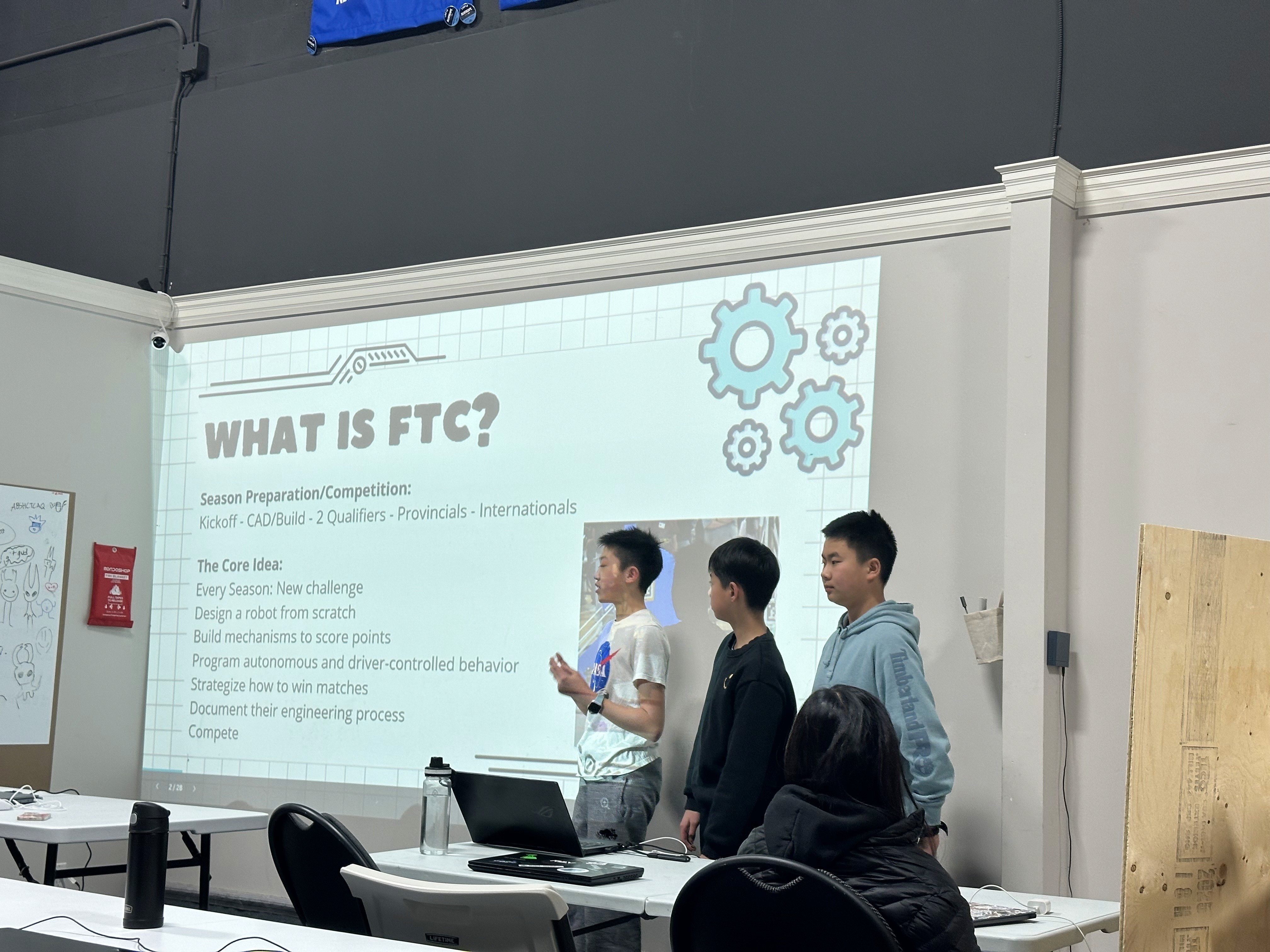
SolversMind Robotics is expanding its student-led FIRST pathway as 20 FLL graduates transition into FTC training, developing deeper engineering ownership through CAD, programming, robot design, testing, and mentorship while preparing the next generation of FRC leaders in Aurora, Ontario.
By SolversMind Robotics
Published February 13, 2026 | Updated August 01, 2026
Reviewed by SolversMind Robotics mentors
Why are SolversMind FLL graduates transitioning to FTC training?
At the end of the 2025–2026 FIRST LEGO League UNEARTHED season, all 20 SolversMind FLL graduates chose to continue their robotics journey through FIRST Tech Challenge (FTC) training. This transition is designed to help students move beyond learning robotics concepts and develop true engineering ownership. Through FTC, students gain repeated opportunities to design mechanisms, build robots, program control systems, test prototypes, analyze failures, and explain their technical decisions. The program builds on six seasons of SolversMind FLL success, including 30 awards, 19 team-seasons, and thousands of hours of student training and mentorship. Rather than simply moving students to a higher competition level, SolversMind uses FTC as a bridge between FLL curiosity and FRC-level systems leadership. The goal is to create more independent builders, problem-solvers, and future robotics leaders who can confidently take ownership of complete engineering projects.
The real problem is not access. It is ownership.
SolversMind FLL teams have built a meaningful foundation over six seasons: 30 awards including two Coach Awards, 19 team-seasons, and an estimated 4,712 hours of mentoring and extra training. The deeper outcome is not the count. It is a community of students who learned to research, prototype, program, present, recover from disappointment and support one another. Yet FLL alone cannot give every graduate enough time with the technical systems they will eventually meet in FRC.
What our rookie FRC season taught us
Bubbles’ first FRC season was a remarkable success, but it also made our training gap visible. Team captain Ryan Zhang built roughly 90% of the robot from scratch. That contribution was exceptional and helped establish the standard for the team. It also showed why a sustainable student-led program must convert individual mastery into shared capability. A team cannot call itself student-owned if only one student can design the system, troubleshoot the mechanism and explain why it works.
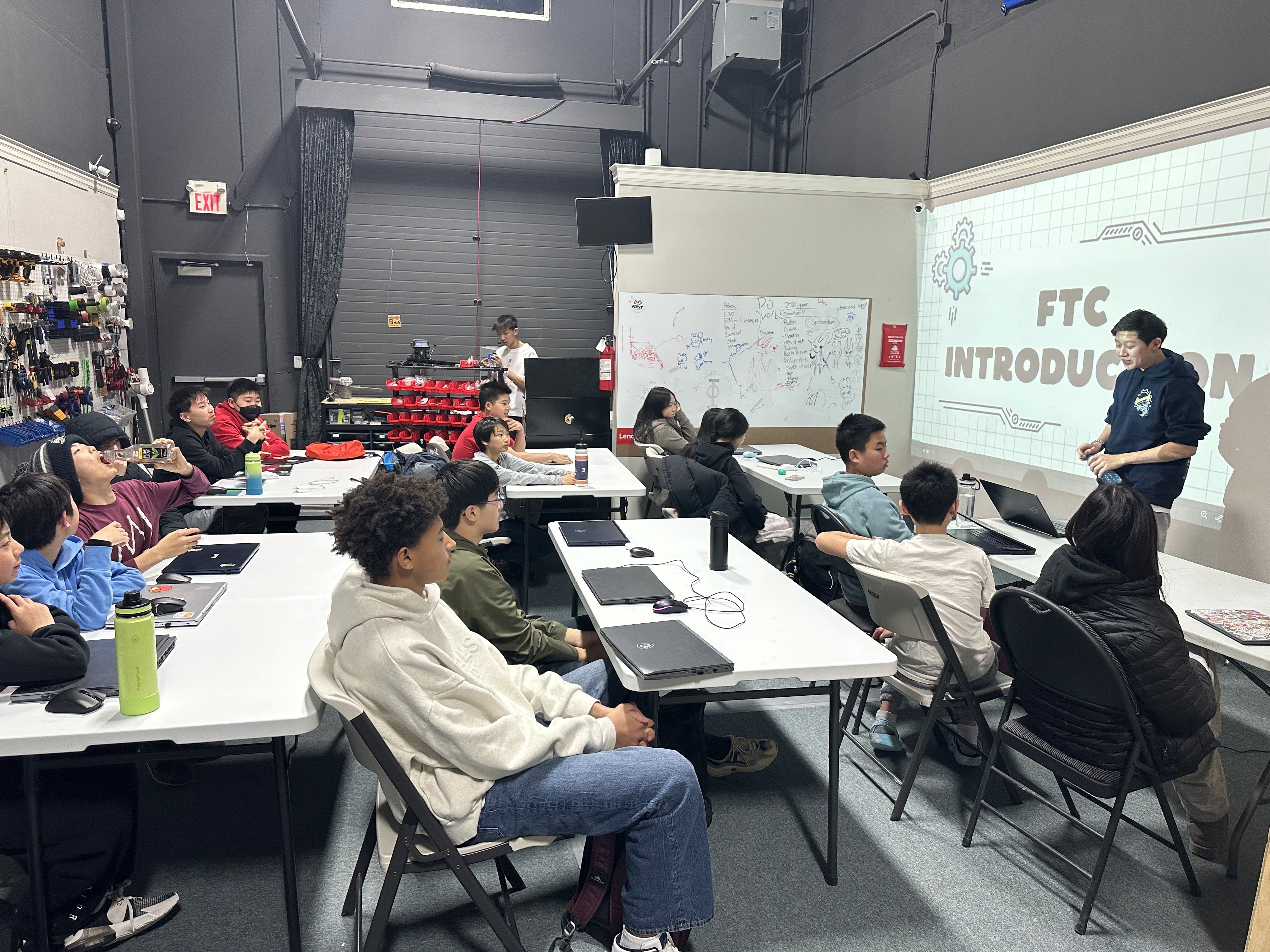
FTC is the practical answer to that challenge. It is not a smaller version of FRC or a waiting room before the real work starts. FIRST Tech Challenge is its own serious engineering program: compact enough for students to iterate quickly, yet rich enough to demand CAD, mechanisms, wiring, sensors, programming, testing, documentation and strategy. It gives students repeated full-cycle ownership without the intimidation of a large FRC robot and six-week build season.
FLL -> FTC -> FRC: curiosity -> ownership -> systems leadership
Stage | What students practise | Why it matters |
|---|---|---|
FLL / Curiosity | Research, build, program, present | 30 awards, 19 team-seasons and a shared language for teamwork |
FTC / Ownership | Design, build, code, test, explain and iterate | All 20 FLL graduates gain repeated hands-on technical decisions |
FRC / Leadership | Integrate systems, manage risk, compete and mentor | More capable contributors and a stronger student work model |
The Feynman Technique: teach it until it is yours
The FTC training model is built around the Feynman Technique: if a student cannot explain a concept clearly to a younger teammate, they have not fully learned it yet. Students first study a problem, then teach it in plain language, discover the gaps in their own understanding, return to the design or code, and explain it again. This turns explanation into an engineering test, not a presentation exercise.
Experienced FLL technicians are already applying this method. They research FTC robot architecture, mechanisms and control concepts, then prepare peer lessons for new FTC students. A lesson on a drivetrain, an intake or a sensor is only successful when the audience can rebuild the idea, ask better questions and use it on the robot. In this model, student teachers become leaders of their peers rather than passive assistants.
A mentorship loop, not a one-way ladder
FRC students serve as youth mentors to help FTC teams build technical confidence, but the learning moves both ways. FTC pushes FRC mentors to make their own expertise understandable and exposes them to fast iteration, compact design choices and new student questions. FLL graduates bring research habits and communication strengths. FTC students turn those strengths into hardware and code. FRC members connect the work to competition-scale systems and strategy. The result is a feedback loop across SolversMind Robotics, not a one-way ladder.
The goal is not to rush students toward the biggest robot. It is to give them the right challenge at the right time: FLL builds curiosity, FTC creates technical ownership, and FRC develops systems leadership. SolversMind remains committed to 100% student work, deliberate training and a culture of mutual support. FTC is how more learners become confident builders - and how today’s learners become tomorrow’s mentors.