Students Teaching Teachers: FRC Team 10015 Bubbles Leads a FIRST Robotics Canada 3D Design Workshop
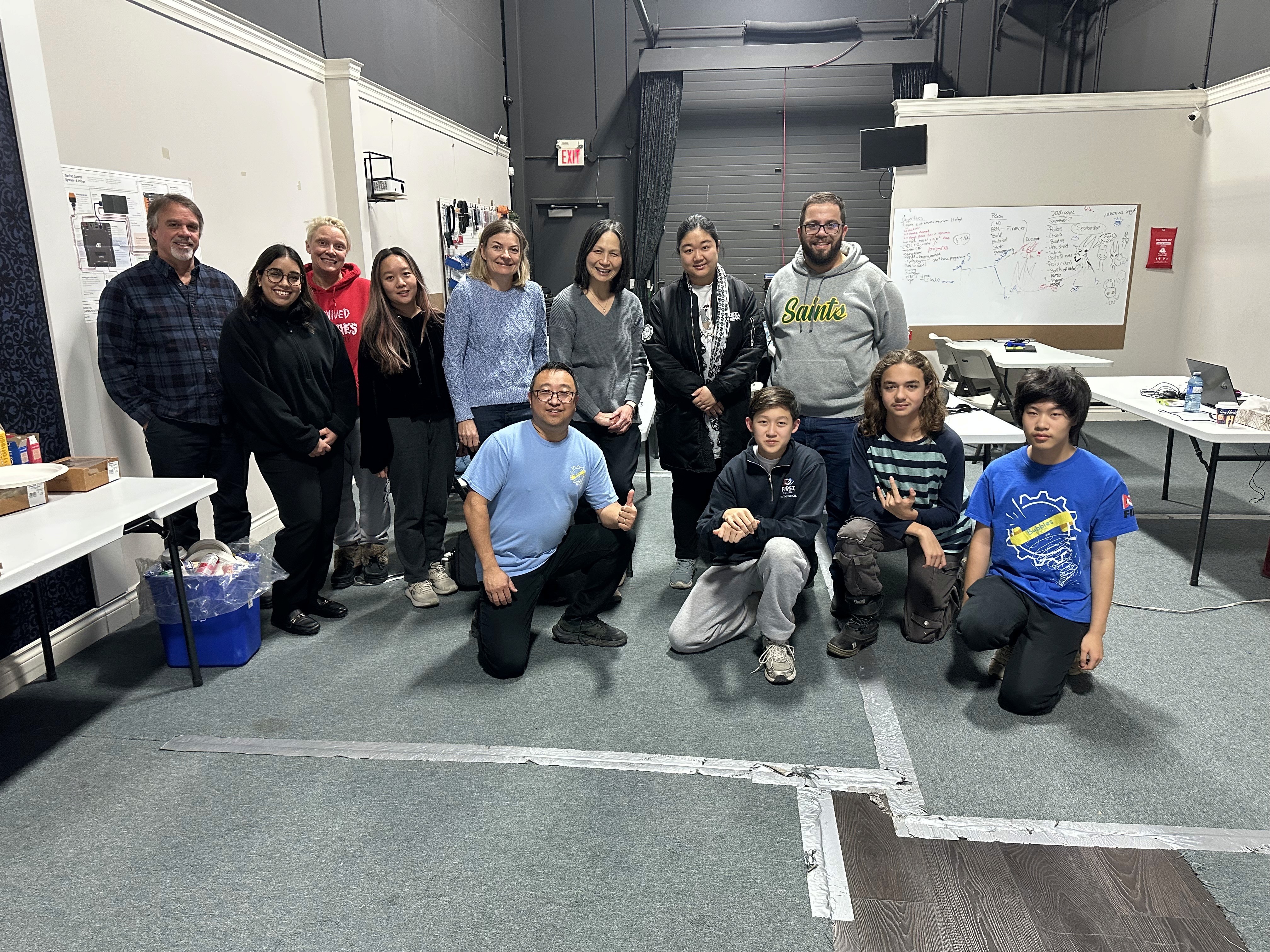
Led by Grade 10 team captain Ryan Zhang, student members of FRC Team 10015 Bubbles hosted and delivered a FIRST Robotics Canada Teacher Upskilling Workshop for 12 local high school STEM teachers at SolversMind Robotics in Aurora. The workshop demonstrated that the team’s engineering knowledge, technical achievements, and leadership are genuinely developed and owned by its students (FIRST Canada).
By SolversMind Robotics
Published December 6, 2025 | Updated July 17, 2026
Reviewed by SolversMind Robotics mentors
What happens when students become the teachers?
At SolversMind Robotics, students are not trained simply to follow instructions, assemble prepared designs, or complete tasks assigned by adults. They are encouraged to understand what they build, make their own technical decisions, learn through failure, take ownership of their knowledge, and eventually become capable of teaching others. That philosophy came to life when student members of FRC Team 10015 Bubbles hosted and delivered a hands-on CAD design and 3D printing workshop for 12 local high school STEM teachers at the SolversMind Robotics facility in Aurora, Ontario. The workshop was part of the broader Teacher Upskilling Workshop program organized and sponsored by FIRST Robotics Canada. The program provides Ontario educators with hands-on opportunities to strengthen their technical knowledge and bring practical, industry-relevant engineering and skilled-trades experience back into their classrooms. For one day, the traditional roles were reversed. The teachers became the learners. The students became the instructors.
What is the FIRST Robotics Canada Teacher Upskilling Workshop program?
Since 2023, FIRST Robotics Canada has delivered free, hands-on Skilled Trades Teacher Upskilling Workshops for educators teaching students in Grades 7 through 12 across Ontario.
The program helps teachers develop practical experience in areas connected to engineering, advanced manufacturing, technology, digital fabrication, and the skilled trades. By strengthening teachers’ technical confidence, the program helps more students gain access to modern tools and authentic engineering experiences in their own classrooms.
These workshops are usually hosted by established colleges, universities, and other large educational institutions that already have the facilities, equipment, technical staff, and experience required to deliver professional training.
That made the selection of FRC Team 10015 Bubbles especially meaningful.
Bubbles is not a college, university, or large institution. It is a young, community-based robotics team operating from SolversMind Robotics in Aurora.
Yet FIRST Robotics Canada trusted the team to host and deliver the workshop because its students had demonstrated the technical knowledge, preparation, professionalism, and leadership required to create a valuable learning experience for educators.
Bubbles was the only community-based team selected as a host, while the other workshops were generally associated with universities, colleges, or larger institutional facilities.
Who served as the main lecturer?
The workshop’s main lecturer was Ryan Zhang, captain of FRC Team 10015 Bubbles.
What made his role particularly remarkable was that Ryan was only a Grade 10 student teaching professional high school educators.
His ability to lead the workshop did not come from memorizing a prepared presentation or repeating instructions created by adults.
It was built through years of authentic participation in FIRST programs, extensive hands-on engineering experience, and genuine responsibility for the development of his team’s robot.
Ryan began building his technical foundation through multiple seasons of FIRST LEGO League. Through FLL, he gained extensive experience in robot design, programming, problem-solving, engineering projects, presentations, teamwork, and competition strategy.
That experience taught him how to move through the complete innovation process: identifying a problem, developing an idea, building a solution, testing it, improving it, and clearly explaining the final result.
When FRC Team 10015 Bubbles entered the much more demanding environment of the FIRST Robotics Competition, Ryan carried that experience with him.
While still in Grade 9, he held primary responsibility for developing and integrating many of the team robot’s major systems. His work included programming, system integration, testing, troubleshooting, autonomous development, and continued improvement of the robot throughout the competition season.
He did not simply operate a finished machine.
He understood how the robot worked, why its technical decisions had been made, how its systems interacted, and how failures could be diagnosed and corrected.
That depth of experience and ownership made him capable of standing in front of professional educators and teaching with confidence.
How could a Grade 10 student teach experienced educators?
Age alone does not determine whether someone is ready to teach.
Real experience does.
By the time he led the workshop, Ryan had already spent years designing robots, writing and debugging software, testing mechanisms, preparing competition systems, solving problems under pressure, and explaining technical decisions to teammates, judges, mentors, educators, and members of the public.
He had also learned that technical knowledge is incomplete until it can be communicated clearly.
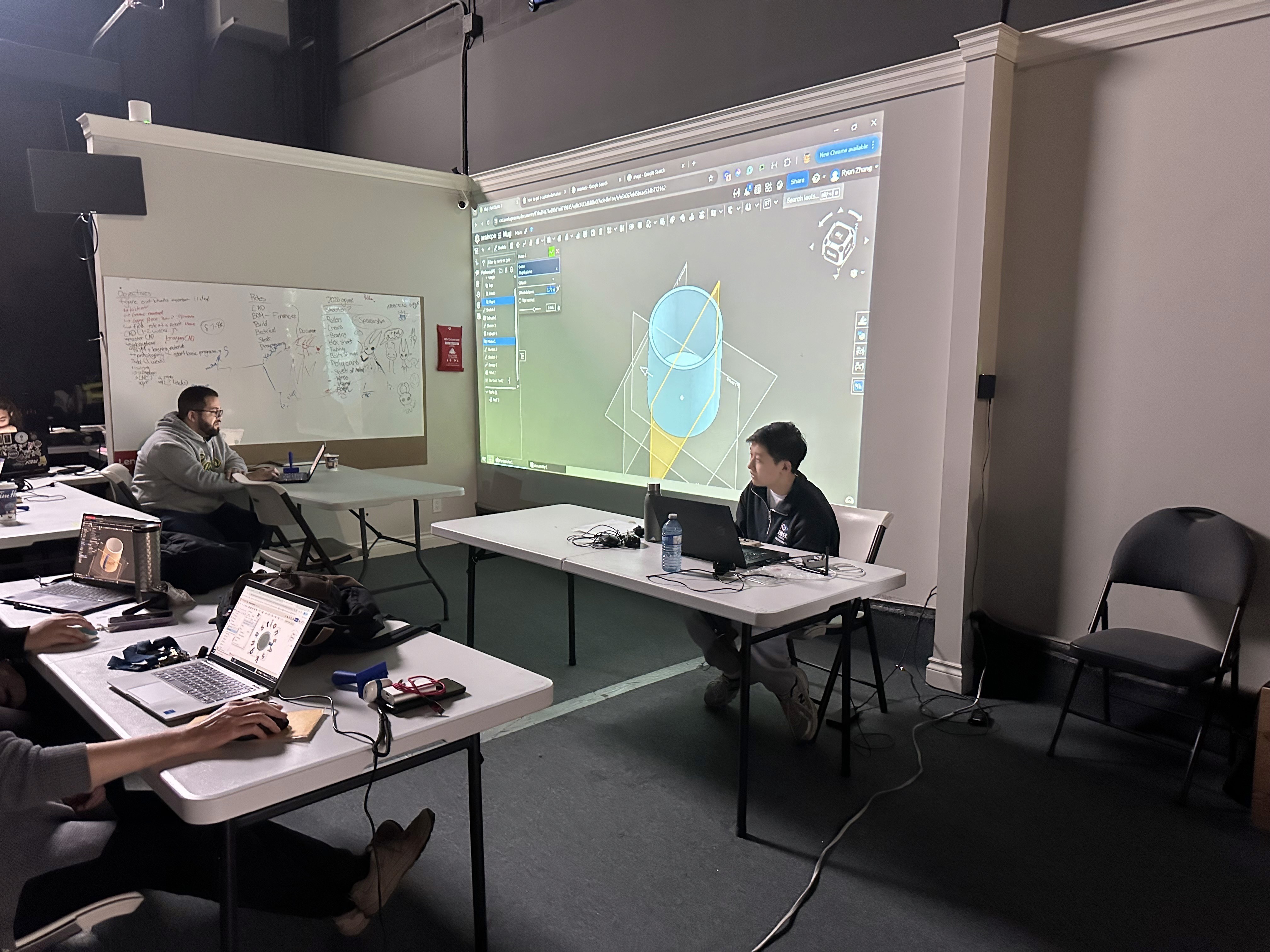
As the main lecturer, Ryan introduced the workshop content, guided teachers through the CAD and digital fabrication process, explained technical concepts, demonstrated the engineering workflow, answered questions, and helped participants troubleshoot challenges during the hands-on activities.
Other members of FRC Team 10015 Bubbles supported the workshop, but Ryan carried the primary responsibility for delivering the lecture and leading the overall learning experience.
For the participating teachers, it was unusual to receive professional technical training from someone so young.
For Ryan, it was the natural result of years of authentic student work.
Why was a young community team able to host professional teacher training?
Hosting a professional development workshop requires much more than access to equipment.
The instructors must understand the subject deeply enough to explain it clearly, answer unexpected questions, support participants with different levels of experience, troubleshoot technical problems, and guide everyone toward successful and recognizable results.
FRC Team 10015 Bubbles was able to meet that standard.
The students prepared the workshop content, organized the technical process, demonstrated the design tools, supported the operation of the equipment, and helped teachers complete practical work that could later be adapted for use in their own classrooms.
The feedback from participants was overwhelmingly positive. Teachers recognized the clarity, confidence, patience, and technical understanding demonstrated by the young instructors.
The success of the workshop showed that the team’s knowledge does not exist only in adult mentors, written instructions, or a small group of specialists.
The knowledge belongs to the students.
They understand the tools they use. They understand why engineering decisions are made. They understand how designs are developed, tested, corrected, and improved.
Most importantly, they can transfer that knowledge to others.
What did the teachers learn?
During the workshop, the student instructors introduced participating educators to the complete digital design and fabrication process.
Teachers gained hands-on experience with:
creating and modifying parts using CAD software
understanding three-dimensional design principles
preparing digital models for fabrication
using slicing software for 3D printing
configuring and operating 3D printers
identifying common printing problems
improving unsuccessful designs
applying additive manufacturing to classroom projects
connecting digital fabrication with engineering and maker-centred learning
The workshop was based on the same practical engineering process that Bubbles students use while developing their FIRST Robotics Competition robot.
A part begins as an idea. It is transformed into a digital model, manufactured as a physical prototype, tested under real conditions, and redesigned when necessary.
By moving through that process themselves, teachers experienced not only how CAD and 3D printing tools work, but also how they can be used to teach engineering thinking, problem-solving, creativity, and perseverance.
Why could the students teach from real engineering experience?
The student instructors were not presenting knowledge they had learned only for the workshop.
They were teaching skills they regularly use.
Members of FRC Team 10015 Bubbles rely on CAD, programming, prototyping, and digital fabrication to design robot mechanisms, produce custom components, evaluate ideas, test solutions, and improve their competition robot throughout the season.
They have experienced measurements that did not fit, structures that were not strong enough, prints that failed, mechanisms that behaved differently from their digital models, and designs that needed several revisions before they worked reliably.
Those experiences matter.
Someone who has only followed a tutorial may know which buttons to press.
A student who has designed, failed, rebuilt, tested, and succeeded understands the complete engineering process.
That is why Ryan and the other Bubbles students were able to explain not only how to create a model or operate a printer, but also how to recognize problems, evaluate alternatives, make engineering decisions, and improve a solution.
What did the workshop prove about student ownership?
In youth robotics, a finished robot does not always reveal who truly owns the knowledge behind it.
A team may produce an impressive machine, but people outside the program may still wonder how much of the design, programming, fabrication, troubleshooting, and decision-making was completed by students.
This workshop provided a clear answer.
Ryan was able to teach professional educators because he had personally developed and applied the knowledge he was sharing.
He could explain the engineering process because he had lived through it.
He could discuss failed designs because he had rebuilt them.
He could guide troubleshooting because he had solved similar problems while developing the team’s own robot.
He was not presenting an adult-created lesson as a student representative.
He was teaching knowledge that he genuinely owned.
The same was true of the other Bubbles students supporting the session. Their confidence came from authentic experience designing, manufacturing, programming, testing, and improving their own work.
The students were not assistants standing beside adult instructors.
They were the instructors.
This was powerful evidence that Bubbles is built on authentic student work and student-owned knowledge.
How does this reflect the SolversMind philosophy?
SolversMind was founded on the belief that meaningful STEM education must go beyond completing projects, following tutorials, or preparing for competitions.
Students should understand what they are doing.
They should be able to make decisions rather than always waiting for instructions.
They should be allowed to struggle with difficult problems, experience unsuccessful attempts, identify what went wrong, and gradually develop the confidence to create their own solutions.
The role of a mentor is not to produce impressive work on behalf of students.
The role of a mentor is to create the environment, provide appropriate guidance, establish high standards, and give students the time and responsibility needed to become capable of producing impressive work themselves.
At SolversMind, success is not measured only by whether a robot performs well or whether a team wins an award.
A stronger measure is whether students can explain their work, defend their decisions, repair their mistakes, transfer their knowledge, and eventually teach someone else.
The Teacher Upskilling Workshop demonstrated that progression at the highest level.
The students had moved from learning technical skills to applying them, from applying them to mastering them, and from mastering them to teaching professional educators.
How did the workshop develop Ryan Zhang’s leadership?
Leading a professional workshop required much more than technical ability.
Ryan had to organize complex information, communicate with adults, adjust his explanations for participants with different levels of experience, answer unexpected questions, manage the pace of the session, and remain responsible for the overall quality of the learning experience.
These are the same qualities required of strong leaders throughout the FIRST community.
The workshop strengthened his ability to combine technical knowledge with communication, service, mentorship, responsibility, and community impact.
His leadership was not based only on holding the title of team captain.
It was demonstrated through his willingness to share knowledge, support others, represent his team professionally, and use his experience to create opportunities for a wider educational community.
Experiences like this are preparing Ryan for future leadership positions within FIRST and the broader STEM community.
They are helping him grow not only as a programmer and engineer, but also as a mentor, speaker, educator, and youth leader.
Why is Ryan becoming a role model for younger students?
For many younger students at SolversMind, Ryan represents what long-term participation in FIRST can make possible.
They can see a student who began by learning LEGO robotics, developed advanced engineering and programming skills through years of FLL experience, took major responsibility for developing an FRC robot while still in Grade 9, became the captain of an FRC team, and then stood in front of high school teachers as the main lecturer of a professional development workshop.
That progression gives younger students a visible path to follow.
It shows them that they do not need to wait until university or adulthood to contribute meaningful ideas, lead important projects, teach others, or make an impact in their community.
Ryan’s example demonstrates that young people can earn responsibility through knowledge, consistency, hard work, and service to others.
He has become a role model not simply because of what he has achieved, but because he is willing to share what he has learned and help other students believe that they can follow a similar path.
At SolversMind, this is one of the most important outcomes of robotics education.
The goal is not simply to train students who can build a robot.
The goal is to develop students who understand their work, take responsibility for it, share what they know, inspire others, and become capable of leading the next generation.
Why does teaching teachers create a larger impact?
A student may directly help several teammates during a robotics season.
A teacher may influence hundreds or thousands of students throughout a career.
By helping educators develop confidence in CAD, additive manufacturing, digital fabrication, and engineering design, the Bubbles students created an impact that extends far beyond their own team.
Each participating teacher returned to a school community with new technical skills, practical project ideas, and a better understanding of how modern fabrication tools can be incorporated into STEM education.
Those teachers can now introduce more students to engineering design, rapid prototyping, manufacturing, robotics, and the skilled trades.
The knowledge therefore continues to multiply.
Students taught teachers.
Teachers will teach more students.
Some of those students may later become engineers, designers, programmers, skilled tradespeople, entrepreneurs, mentors, or educators themselves.
This is one of the most meaningful forms of community impact a robotics team can create.
What did the workshop mean for FRC Team 10015 Bubbles?
For Bubbles, the workshop was more than a technical training session or another outreach event.
It was a demonstration of technical maturity, independent student work, leadership, professionalism, and knowledge transfer across generations.
The students showed that they were capable not only of building competitive robots, but also of understanding their engineering process deeply enough to teach it to adults.
That distinction is important.
Awards can recognize the result of a season.
A workshop like this reveals the people, knowledge, experience, and student ownership behind those results.
It showed that Bubbles students are not simply participants in a robotics program.
They are designers, programmers, problem-solvers, mentors, instructors, and emerging leaders who can contribute meaningfully to education in their community.
Building a stronger STEM community in Aurora and York Region
As a student-centred robotics organization in Aurora, SolversMind Robotics develops young people through long-term experience in engineering, programming, digital fabrication, teamwork, communication, and leadership.
Its students participate in FIRST LEGO League, FIRST Tech Challenge, and FIRST Robotics Competition, but their development is not limited to competition.
They mentor younger students, lead community programs, present their work publicly, support educators, and use their knowledge to expand access to meaningful STEM learning throughout Aurora, York Region, and Ontario.
Hosting the FIRST Robotics Canada Teacher Upskilling Workshop was an important recognition of that work.
Although this type of professional training is normally delivered through established colleges, universities, and institutional facilities, the young members of FRC Team 10015 Bubbles demonstrated that a community-based student team could also deliver a professional, valuable, and highly successful learning experience.
SolversMind is grateful to FIRST Robotics Canada for sponsoring the Teacher Upskilling Workshop program and trusting Bubbles with the responsibility of hosting and delivering this session.
Most of all, we are proud of our students.
They showed what young people can achieve when they are given real responsibility, high standards, long-term support, and genuine ownership of their learning.
They did not simply demonstrate what they had learned.
They proved that the knowledge was truly theirs.
Learn more about the FIRST Robotics Canada Teacher Upskilling Workshops
Educators interested in future training opportunities can learn more through the official FIRST Robotics Canada Teacher Upskilling Workshops program page (FIRST Canada).
Tags:
Teacher Professional Development, 3D Printing, Ryan Zhang, STEM Education, CAD Design, Maker Education, Engineering Education, Hands-On Learning, Ontario Teachers, Classroom Innovation, SolversMind