A Historic First for Canada at the FIRST World Championship!
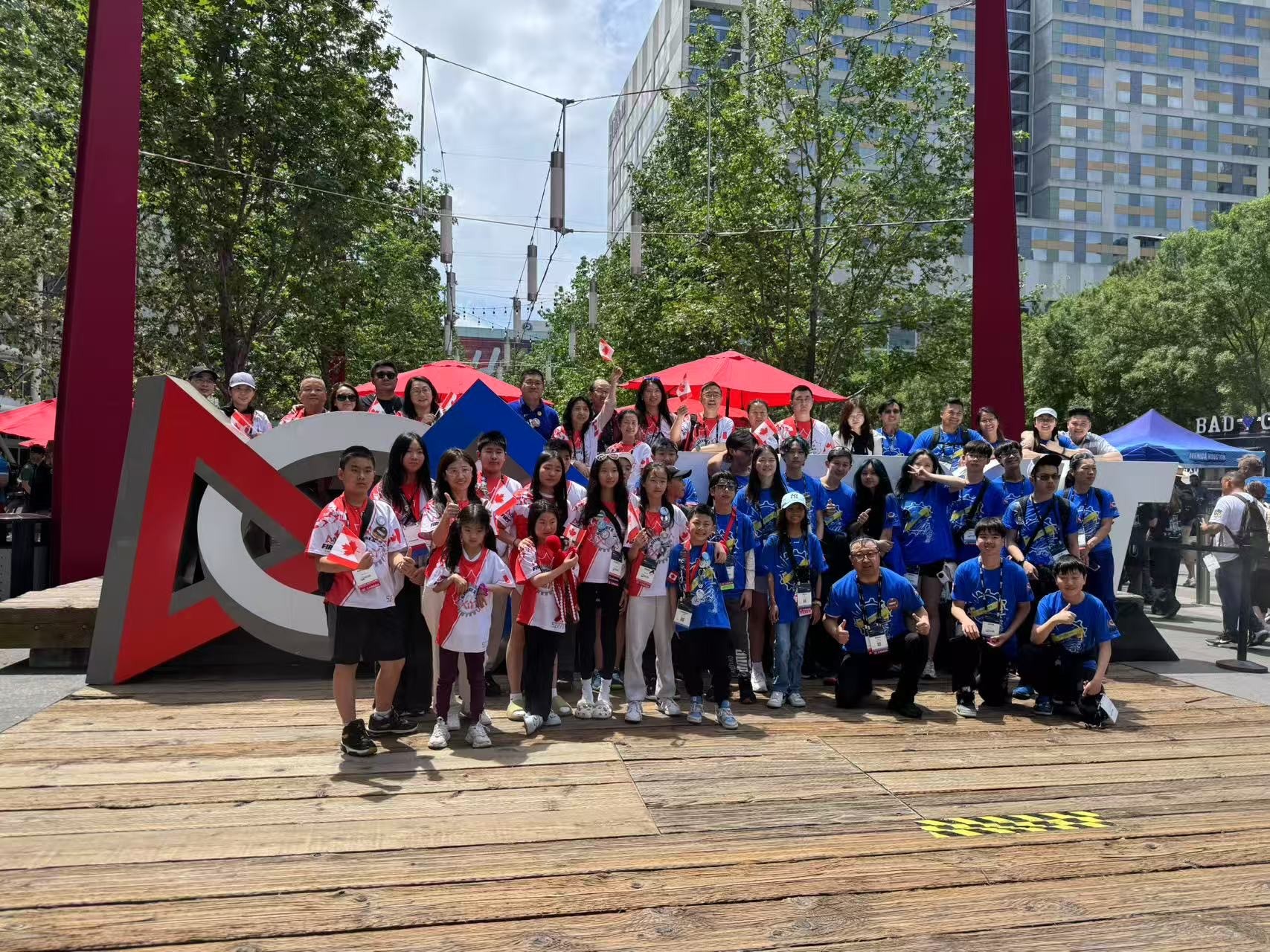
In a historic moment for Aurora and Canadian youth robotics, SolversMind Robotics brought both FLL Team 52777 Solvers of X & Y and rookie FRC Team 10015 Bubbles to the 2025 FIRST Championship in Houston during the same season. Both student-led teams earned international awards, demonstrating the strength of SolversMind’s connected FLL-to-FRC pathway, first-principles STEM training, sustainability education, and commitment to 100% student-owned work (NewmarketToday).
By SolversMind Robotics
Published April 19, 2025 | Updated July 22, 2026
Reviewed by SolversMind Robotics mentors
What made SolversMind’s 2025 FIRST Championship achievement historic?
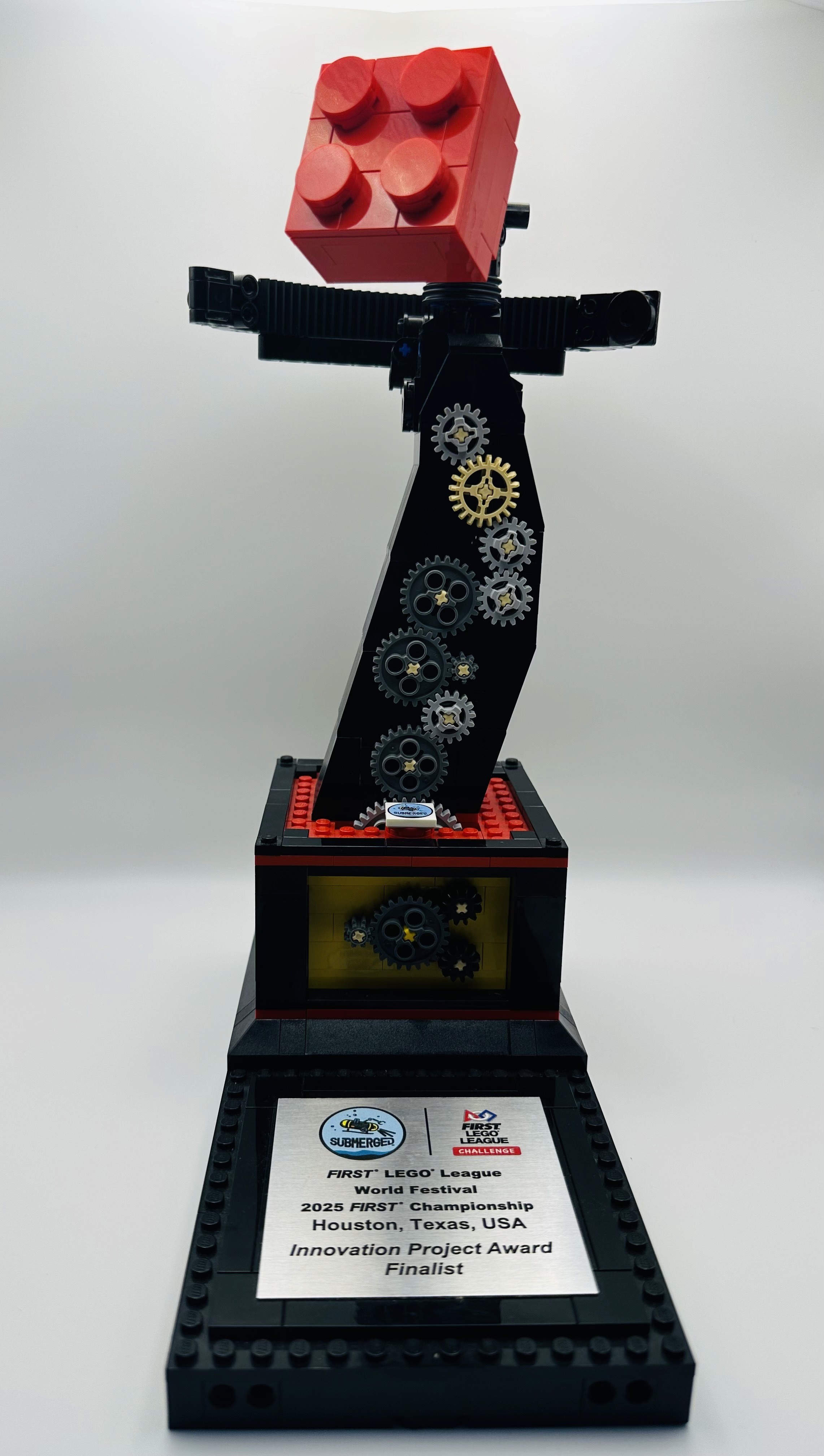
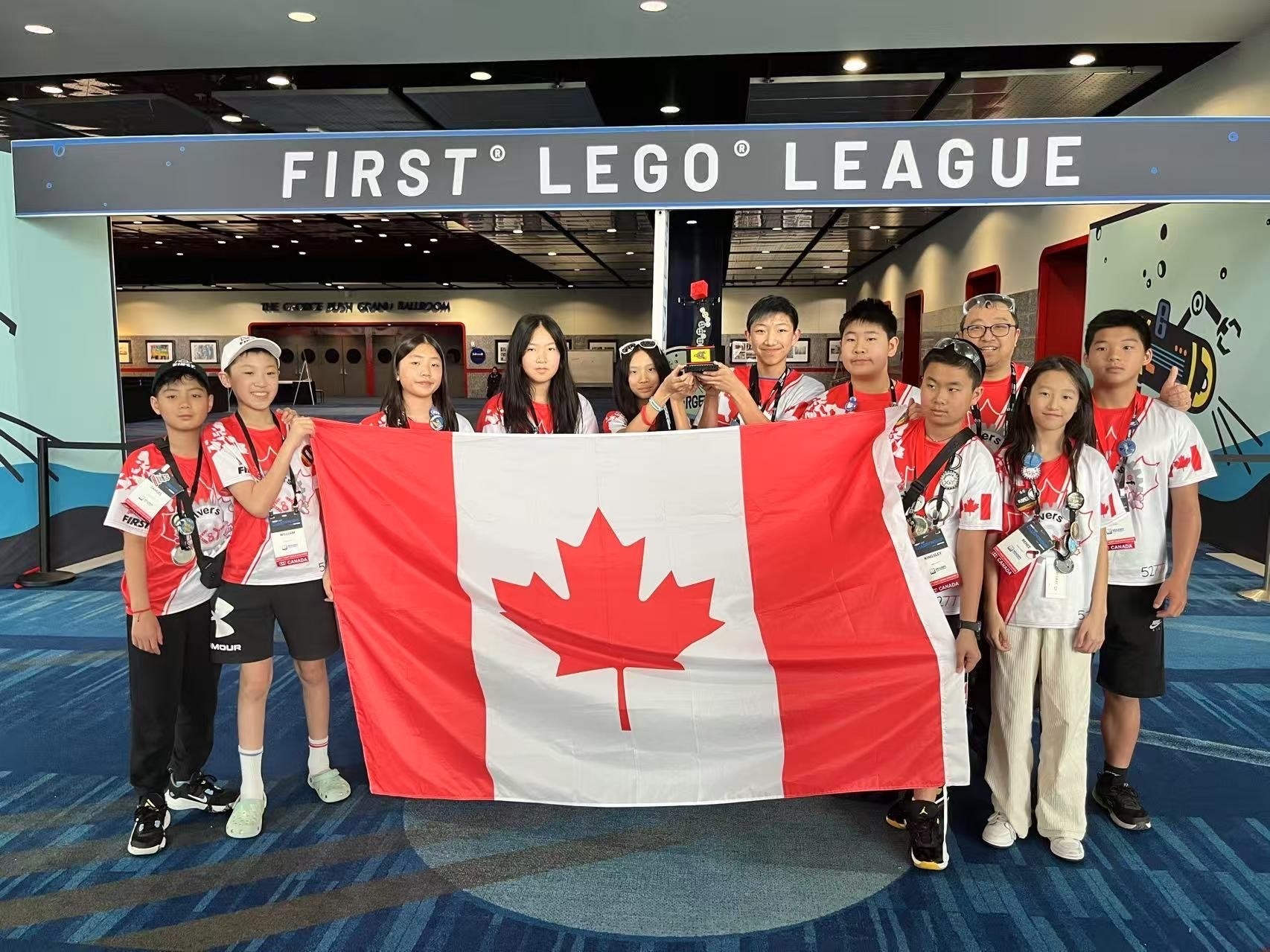
In a historic moment for Aurora and Canadian youth robotics, SolversMind Robotics brought both a FIRST LEGO League team and a rookie FIRST Robotics Competition team to the 2025 FIRST Championship in Houston during the same season, and both earned international awards. FRC Team 10015 Bubbles received the Milstein Division Rookie All-Star Award (FRC-Event), while FLL Team 52777 Solvers of X & Y was named an Innovation Project Award Finalist for its seaweed-based biodegradable plastic solution (FIRSTInspires). The two teams competed at different levels of FIRST, but they were developed within the same community organization, under the same educational philosophy and coaching system. Their success demonstrated the strength of SolversMind’s long-term FLL-to-FRC pathway, authentic student ownership, critical thinking, first-principles reasoning, sustainability education, and mentorship across age groups. More than two trophies, the results showed what young people can accomplish when adults trust them with meaningful responsibility and allow them to own the work.
Why was bringing both FLL and FRC teams to the World Championship so significant?
FIRST LEGO League and FIRST Robotics Competition represent very different stages of a student’s robotics journey.
FIRST LEGO League introduces younger students to autonomous robotics, programming, innovation projects, engineering design, teamwork, communication, and Core Values.
FIRST Robotics Competition challenges high school students to design, manufacture, wire, program, test, and operate a full-size competition robot while managing strategy, outreach, documentation, fundraising, and project deadlines.
In 2025, SolversMind brought teams from both programs to the same FIRST Championship for the first time in the organization’s history.
Even more remarkably, both teams returned with awards.
“This is a proud day not just for our teams, but for Canada,” said coach Mr. Dahai Zhang. “We’ve proven that with mentorship, teamwork, and student leadership, young people can reach the very top.”
FRC Team 10015 Bubbles earned the Milstein Division Rookie All-Star Award during its first FRC season (BlueAlliance). FLL Team 52777 Solvers of X & Y was named an Innovation Project Award Finalist for its student-developed seaweed-based biodegradable plastic solution (FIRSTInspires). The achievement followed the team’s Ontario Champion’s Award 1st Place and advancement to the World Festival.
Based on the publicly available records we have reviewed, SolversMind is believed to be the first community-based Canadian robotics organization to bring both its FLL and FRC teams to the FIRST Championship in the same season and have both earn international awards under the same coaching and training system.
Regardless of the record, the achievement itself was extraordinary.
It showed that a local robotics organization in Aurora could develop world-recognized students at both the foundational and advanced levels of FIRST.
Why was Bubbles’ World Rookie All-Star Award especially meaningful?
Award Script (FRC-Event)
The Rookie All-Star Award celebrates the rookie team exemplifying a young but strong partnership effort, as well as implementing the mission of FIRST to inspire students to learn more about science and technology.
Like shining lights in the sky, these rookies spread their enthusiasm for robotics to all. Though small, they spread their TENTACLES wide to mentor younger teams, use their skills for sponsors, and grow FIRST in their community. This team definitely BUBBLED up through the ranks! The Rookie All-Star Award is presented to: Team 10015 - Bubbles
Congratulations Team 10015!
Bubbles did not arrive at the FIRST Championship with the highest-scoring or most technically dominant robot in its division.
The students understood that their rookie robot was not yet at the level of machines built by established teams with decades of institutional experience, large workshops, extensive sponsorship, and multiple generations of mentors and alumni.
That is precisely why the Rookie All-Star Award was so meaningful.
The judges were not recognizing only the number of game pieces the robot could score.
They were recognizing the team behind it.
They saw a young community-based rookie team whose students had moved from FIRST LEGO League into a significantly more demanding engineering environment. They saw students learning mechanical design, programming, electronics, manufacturing, strategy, driving, outreach, and project management while building their first full-size robot.
They saw growth.
They saw resilience.
They saw authentic student ownership.
They saw the foundation of a team capable of sustaining itself and continuing to improve.
“We started with just an idea and a dream,” said team captain Ryan Zhang. “Now we’ve shown the world what Canadian youth can achieve when given the chance to lead.”
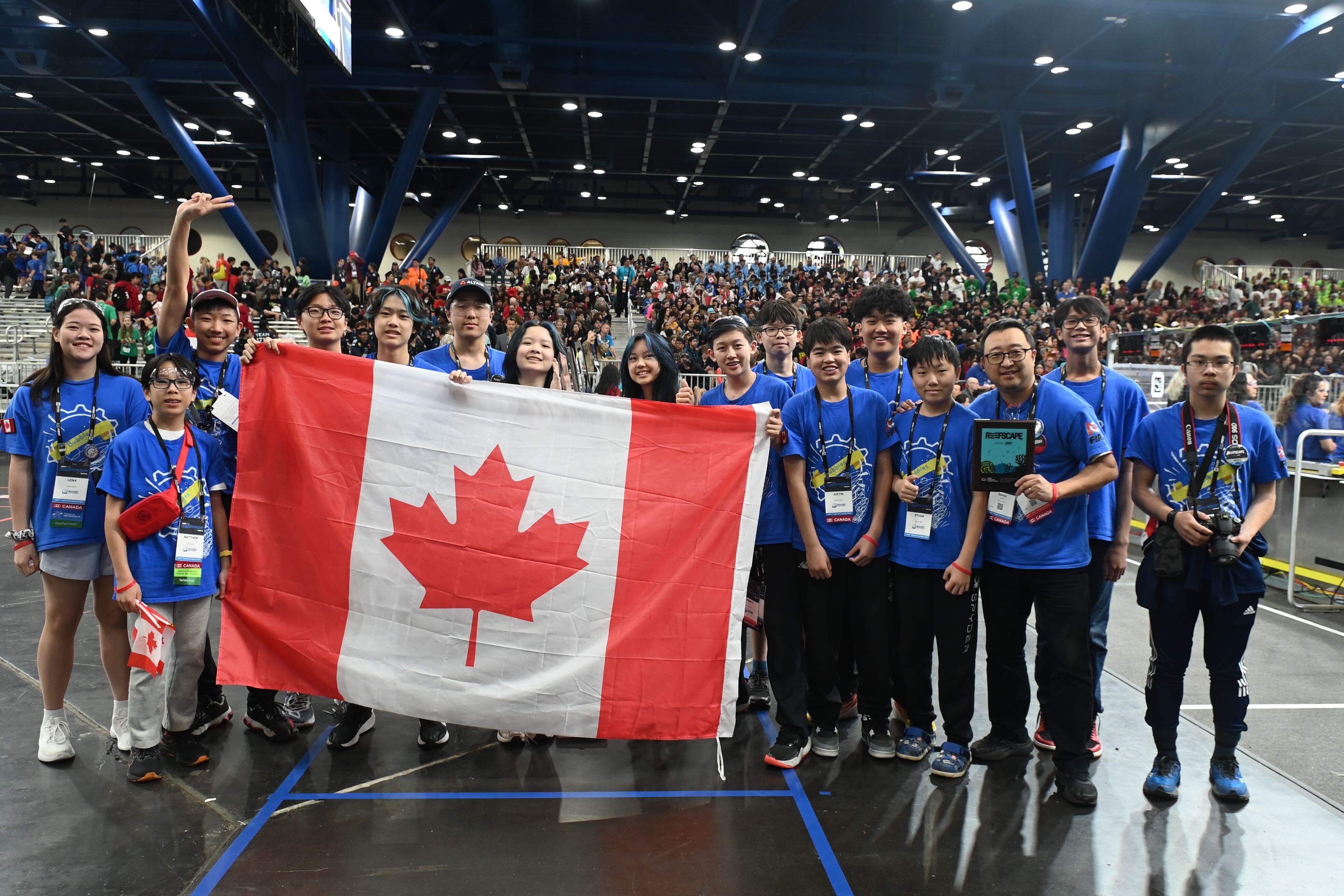
The Rookie All-Star Award honours a team that demonstrates strong potential, a meaningful understanding of FIRST, effective organization, outreach, teamwork, and a foundation for long-term success. Bubbles’ award history across its rookie season confirms that judges repeatedly recognized those qualities at the district, provincial, and world levels.
How did Bubbles grow from FIRST LEGO League into FRC?
Many Bubbles students entered FRC with several years of experience in FIRST LEGO League.
Through FLL, they had already learned how to:
design and program autonomous robots
break complex missions into smaller problems
test and improve attachments
research real-world issues
communicate with judges
manage competition pressure
work through disagreements
mentor younger students
learn from failed designs
take ownership of a complete project
FRC expanded those responsibilities dramatically.
The students now had to work with full-size mechanisms, powerful motors, complex electronics, advanced software libraries, vision systems, manufacturing constraints, strict safety requirements, and a robot whose systems were deeply interconnected.
A programming error could affect a mechanism.
A mechanical change could alter autonomous movement.
A wiring issue could interrupt the whole machine.
A strategic decision could determine which design features mattered most.
The students were not starting from nothing, however. Their FLL experience had already taught them how to think, test, communicate, and persist.
Bubbles’ rookie season demonstrated the value of a connected development pathway in which younger students build strong foundations and then progress into increasingly advanced engineering and leadership roles.
What did judges recognize beyond robot performance?
A rookie award should not be misunderstood as a consolation prize for a robot that was not top-tier.
It recognizes a different and highly important form of achievement.
FIRST judges evaluate whether a new team is building the culture, knowledge, student leadership, community engagement, and organizational foundation required to survive and grow beyond one season.
Bubbles demonstrated that foundation through:
authentic student-led robot development
technical ambition during a rookie season
a bio-inspired spiral soft robotic arm
programming and autonomous development
extensive student communication and documentation
community outreach
mentorship across age groups
a clear plan for long-term sustainability
visible growth from FLL into FRC
The robot mattered, but it was evidence of a larger process.
What the judges recognized was not perfection.
They recognized potential supported by real work.
They recognized students who were already capable of explaining what they had built, identifying what had failed, understanding what needed improvement, and showing how the team could become stronger in future seasons.
What was Bubbles’ sustainability model?
For a new community-based FRC team, sustainability involves much more than securing funding for another robot.
A team must develop future technical leaders, maintain knowledge when older students graduate, recruit and train new members, build community relationships, establish responsible operating systems, and create a culture that students want to continue.
Bubbles’ sustainability model grew from the SolversMind FLL pathway.
Younger students can begin in FIRST LEGO League, where they build foundations in programming, robot design, problem-solving, presentations, and teamwork. As their experience grows, they can mentor younger participants and gradually enter FTC or FRC roles involving more advanced mechanical, software, electrical, strategy, and leadership responsibilities.
Knowledge is not meant to remain with one expert student.
It must be documented, shared, practised, and transferred.
Older students lead younger students.
Experienced programmers train new programmers.
Mechanical students explain manufacturing and assembly processes.
Drive-team members prepare future operators.
Student leaders learn that their responsibility is not only to perform well themselves, but also to make the people around them more capable.
That is how a team becomes sustainable.
The award recognized Bubbles not simply as a promising rookie robot, but as a growing student organization with the potential to continue contributing to FIRST.
Why was Solvers of X & Y’s seaweed-bioplastic project innovative?
While Bubbles demonstrated the advanced end of the FIRST pathway, Solvers of X & Y showed how younger students could use scientific research and first-principles thinking to address a global environmental challenge.
The students began with plastic pollution.
Conventional plastic is useful because it is inexpensive, lightweight, durable, and adaptable. Those same properties become environmental problems when disposable items remain in landfills, waterways, and ecosystems for decades or longer.
Instead of beginning with an existing product to copy, the students broke the problem into fundamental questions:
Why does conventional plastic persist for so long?
Which plastic products are used briefly but remain in the environment?
Could a renewable biological material provide similar functions?
Could that material grow without competing for farmland?
Could it avoid heavy freshwater and fertilizer requirements?
Could the final product biodegrade more safely after use?
These questions led the team to seaweed.
Seaweed grows rapidly, does not require agricultural land, and can be cultivated without the same freshwater demands as many terrestrial crops. The students investigated how it might become the base of a biodegradable material for packaging or disposable applications.
Their project did not treat sustainability as a slogan.
It applied research, material experimentation, prototyping, testing, expert feedback, and communication to a specific environmental problem.
How did the 6R sustainability model shape the project?
The students considered plastic pollution through a broader 6R sustainability framework, including actions such as refusing unnecessary materials, reducing consumption, reusing products, repairing or repurposing items, recycling resources, and redesigning systems so materials can return more safely to the environment.
Reduce, reuse, and recycle remain important, but the team recognized that recycling alone cannot solve every form of plastic pollution.
Some disposable materials are difficult to sort.
Some become contaminated.
Some are economically impractical to process.
Some lose quality after repeated recycling.
The students therefore asked a deeper first-principles question:
What if the material itself were redesigned from the beginning?
Their seaweed-based solution focused on prevention rather than relying only on waste management after a product had already been discarded.
This moved the project beyond the familiar message of placing plastic into a recycling bin.
It explored how material selection, product design, consumption, end-of-life behaviour, and circular-economy thinking could work together.
The Innovation Project Award Finalist recognition showed that judges valued both the environmental purpose and the students’ effort to turn a broad sustainability challenge into a researched and testable solution.
How did first-principles thinking connect both teams?
The two teams developed very different solutions, but they followed the same way of thinking.
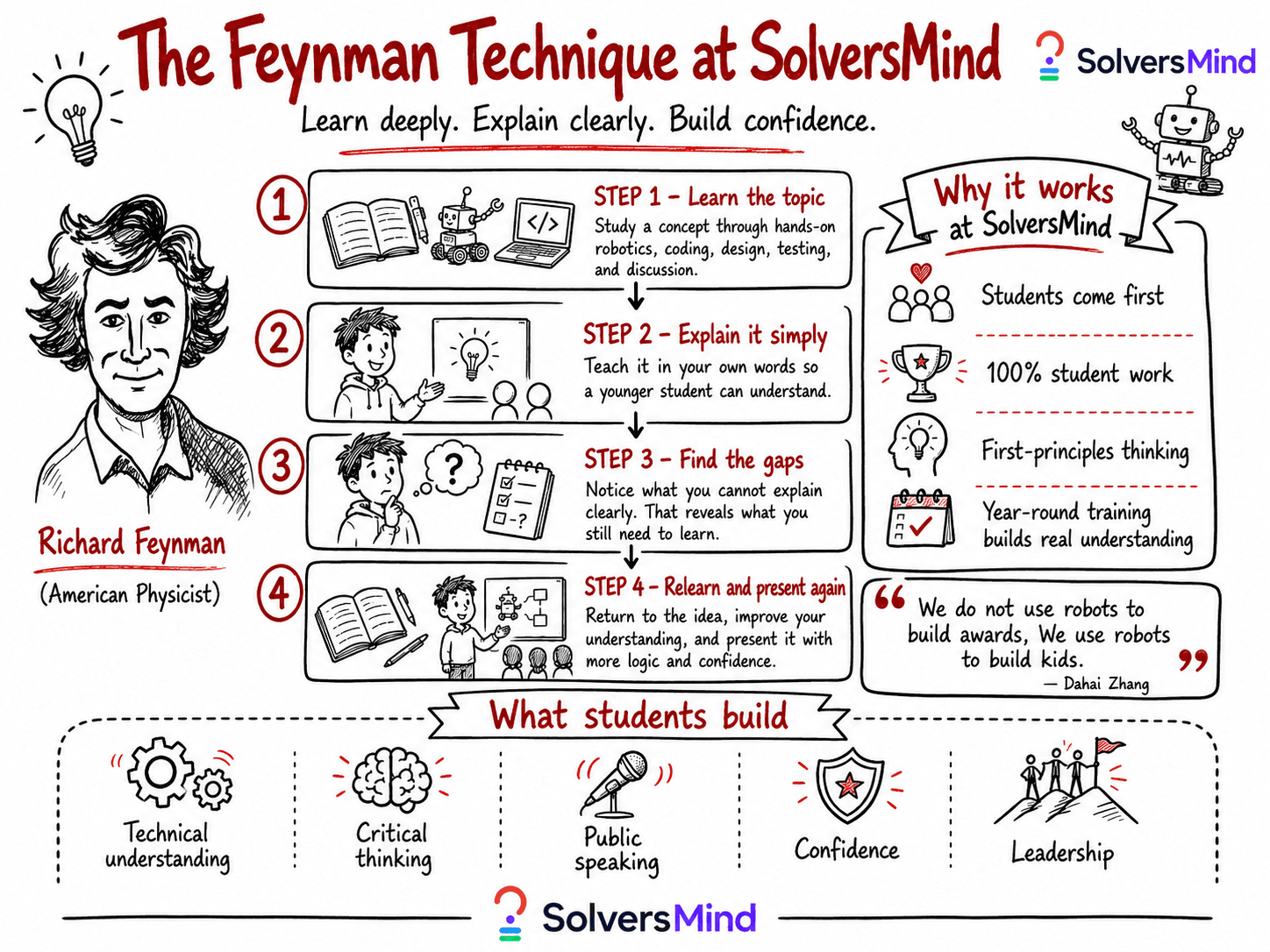
First-principles thinking asks students to break a difficult problem into fundamental facts and constraints before selecting a solution.
For Bubbles, that meant asking:
What must the robot accomplish?
What forces and movements are required?
Which systems depend on one another?
What can students realistically manufacture?
What must remain reliable under competition pressure?
How can a mechanism be simplified?
What did testing reveal that the original assumptions missed?
For Solvers of X & Y, it meant asking:
Why is plastic pollution difficult to solve?
Which material properties are truly necessary?
Which assumptions about plastic production can be challenged?
Could a renewable source replace a petroleum-based one?
What happens to the material after its useful life?
This approach teaches students not to begin with a preferred answer.
They begin with the problem.
They question assumptions, identify constraints, gather evidence, build prototypes, evaluate results, and change direction when necessary.
The success of both teams at the FIRST Championship demonstrated that this training method works across different ages, programs, and forms of innovation.
How did the results demonstrate 100% student-owned work?
SolversMind teams are built around authentic student ownership because ownership is one of the most important drivers of youth learning.
This does not mean students work without mentors, instruction, safety supervision, professional feedback, or community support. It means students remain the primary owners of the thinking, building, programming, testing, research, presentation, and decision-making.
Mentors teach technical foundations, ask questions, establish high standards, support safe practices, and connect students with experts and resources. They do not take over the hardest work simply because an adult could complete it faster.
Bubbles students had to design, build, program, troubleshoot, repair, operate, and explain their robot. Solvers of X & Y students had to research plastic pollution, formulate materials, test prototypes, interpret evidence, interview experts, and defend their solution.
At the World Championship, judges could ask questions the students had never rehearsed. The students had to respond from genuine understanding. That is one of the clearest tests of ownership.
This ownership matters because motivation is often the key to youth success.
FIRST teaches students that they can go anywhere in robotics, engineering, science, entrepreneurship, and leadership when they are willing to pursue an ambitious goal and take responsibility for the journey. It gives young people a reason to chase an idea that may initially appear too difficult, then provides a team, a deadline, a real challenge, and a public stage on which their work matters.
At SolversMind, we have repeatedly observed that highly motivated students use hands-on, project-based learning to push themselves far beyond normal classroom expectations. They willingly study advanced programming, mechanical design, artificial intelligence, material science, control systems, and research methods that may otherwise appear only in university courses or specialized professional settings.
They do this not because the topic appears on a test, but because they need the knowledge to solve a problem they genuinely care about.
That distinction is powerful.
When students own the goal, they seek knowledge with purpose. They persist longer, ask better questions, accept failure as part of the process, and become capable of solving problems that adults may have assumed were beyond their age.
The awards showed that the students did not merely stand beside impressive robots and projects.
They understood them.
They could explain the decisions, failures, evidence, limitations, and next steps because the work was genuinely theirs.
FIRST gives students the confidence to believe they can go somewhere extraordinary.
Student ownership gives them the motivation to begin.
Hands-on learning gives them the tools to continue.
And meaningful responsibility helps them become the people capable of reaching that destination.
Why should adults trust students with difficult work?
Young people are often capable of more than adults expect.
They may work more slowly at first.
They may make mistakes.
Their early prototypes may be less polished than something an experienced adult could produce quickly.
But speed and polish are not the only goals of education.
When adults take over every difficult task, the project may improve while the students lose the opportunity to grow.
When students are given proper instruction, high expectations, meaningful responsibility, and enough room to struggle, they develop knowledge that cannot be produced by observation alone.
They learn how to recover from failure.
They learn how to defend a decision.
They learn when to seek help.
They learn that uncertainty is part of engineering.
They begin to see themselves as people capable of contributing, not merely as children completing an activity designed by someone else.
Students can do better.
With experience, they will do better.
But they need adults who believe in their potential before the final result is guaranteed.
Trust does not mean leaving students unsupported.
It means supporting them without taking ownership away from them.
What does “we use robots to build kids” mean at SolversMind?
At SolversMind, the robot is not the final product.
The student is.
Robotics provides a powerful environment because it makes thinking visible.
A robot reveals whether students understand measurement, mechanics, programming, systems integration, communication, planning, and teamwork. It creates deadlines, uncertainty, technical failure, competition pressure, and the need to depend on others.
These challenges help students develop:
critical thinking
first-principles reasoning
technical confidence
creativity
perseverance
communication
responsibility
teamwork
leadership
humility
resilience
This is why SolversMind does not use children simply as labour to build competition robots.
We use robots to build capable, confident, responsible young people.
Winning matters because it can validate effort and create new opportunities.
However, an award is meaningful only when the development belongs to the students.
A robot can be rebuilt next season.
A student who learns how to think, lead, communicate, and recover from failure carries those abilities for life.
Why were the two awards a perfect demonstration of the SolversMind philosophy?
The two teams succeeded in different ways.
Bubbles did not win because it had the strongest robot at the World Championship.
It earned recognition because judges saw authentic student growth, team culture, technical ambition, outreach, sustainability, and the potential created by its FLL-to-FRC pathway.
Solvers of X & Y did not succeed because students repeated a familiar environmental message.
They used first-principles thinking to examine the limitations of conventional plastic, explore the 6R sustainability model, research seaweed as a renewable material, create prototypes, and communicate a solution with international relevance.
One award recognized the development of a rookie team.
The other recognized a student-created innovation.
Together, they demonstrated the same educational philosophy:
trust students
teach them how to think
give them real responsibility
allow them to fail safely
expect them to understand their work
help them transfer knowledge to others
measure success through growth as well as results
The World Championship outcomes were not separate accidents.
They were two expressions of the same training approach.
Why was this an inspiring moment for Aurora?
Aurora is not one of the world’s largest technology centres.
SolversMind is not a university, a large private school, or a decades-old institutional robotics program.
It is a community-based organization built around young students, committed families, knowledgeable mentors, and a long-term belief in student potential.
Yet in one season, its FLL and FRC teams both reached the FIRST Championship and both earned international recognition.
This demonstrated that world-level youth robotics education can be developed locally.
Aurora students can design advanced machines.
They can explore material science.
They can present to international judges.
They can represent Ontario and Canada.
They can become engineers, environmental innovators, mentors, speakers, and leaders long before adulthood.
The achievement gave younger students a pathway they could see.
They could begin with LEGO robotics.
They could learn to code and design.
They could join a team.
They could mentor someone younger.
They could progress to FRC.
One day, they could stand on the same world stage.
What comes after a historic season?
Historic results should create momentum, not complacency.
Bubbles returned from Houston knowing that its robot and team systems still had significant room to improve. The Rookie All-Star Award created an expectation that the team would continue developing its engineering depth, reliability, leadership, outreach, and sustainability.
Solvers of X & Y returned with the responsibility to continue refining its seaweed-bioplastic concept, strengthening its evidence, sharing its environmental message, and inspiring other young innovators.
Both teams also carried a responsibility to younger SolversMind students.
Their achievements created proof that the pathway works.
The next step was to transfer the knowledge, strengthen the program, mentor the next group, and ensure that the success could continue beyond one season or one generation of students.
A historic achievement built by students
The 2025 FIRST Championship will remain a defining moment in SolversMind’s history.
Two teams.
Two FIRST programs.
One connected development pathway.
One community-based organization from Aurora.
Both teams earned awards on the world stage.
The achievements were different, but the message was the same.
Students can do meaningful technical work.
Students can develop original ideas.
Students can explain and defend their decisions.
Students can lead teams and inspire communities.
Students can do better, and they will do better, when adults give them the instruction, trust, responsibility, and opportunities they deserve.
SolversMind does not measure its greatest success by the number of robots built.
We measure it by the young people those robots help build.
The World Rookie All-Star Award and Innovation Project Award Finalist recognition were powerful results.
The students who earned them were the true achievement.
Tags:
FIRST Championship, FRC Team 10015, FRC Bubbles, Solvers of X & Y, Rookie All-Star Award, Innovation Project Award, Student Leadership, Ryan Zhang, Renee Zhang, Dahai Zhang, FLL-to-FRC Pathway, First-Principles Thinking